
As Bitcoin holds steady at $67,168.00 amid a 1.88% 24-hour gain, CoreDAO stands out in the BTCfi landscape by offering ways to generate yields on your BTC holdings without the drag of lockups. Forget rigid staking periods; CoreDAO's mechanisms let you keep assets fluid while capturing rewards, aligning perfectly with 2026's push toward sustainable revenue in liquid staking tokens.
This approach resonates in a market where BTC's volatility demands capital preservation first. CoreDAO's evolution reflects a pragmatic shift: from experimental liquid staking tokens like the now-deprecated lstBTC to robust dual staking and stCORE, prioritizing real revenue over hype. Yields accrue daily in CORE tokens, minus minimal fees, turning idle BTC into a yield engine without sacrificing liquidity.
CoreDAO's 2026 Revenue Roadmap Powers BTC Yield Innovation
CoreDAO's 2026 roadmap marks a pivot from yield demonstrations to a revenue flywheel, emphasizing BTC attraction, token buybacks, and diversified strategies. Bitcoin Power Grid Modules and Fusion upgrades lay the groundwork for standardized BTCfi, driving value accrual to CORE. This isn't speculative; it's a structured expansion capturing more BTC inflows and converting them into protocol revenue.
lstBTC, once an ERC-20 pegged 1: 1 to BTC for daily CORE rewards, paved the way but has been sunsetted as of early 2026. In its place, CoreDAO doubles down on dual staking- pairing BTC with CORE for amplified base yields- and stCORE, a liquid staking token for CORE holders contributing to network security. These tools enable bitcoin liquid staking tokens participation without lockups, fitting seamlessly into DeFi composability.
From a risk perspective, this maturation reassures. Validator commissions and protocol fees are transparent, with yields rooted in blockchain rewards. As BTC trades between $65,839.00 and $68,318.00 recently, such mechanisms preserve capital during swings while pursuing opportunity.
Dual Staking Unlocks Higher BTC Yields Without Sacrificing Control
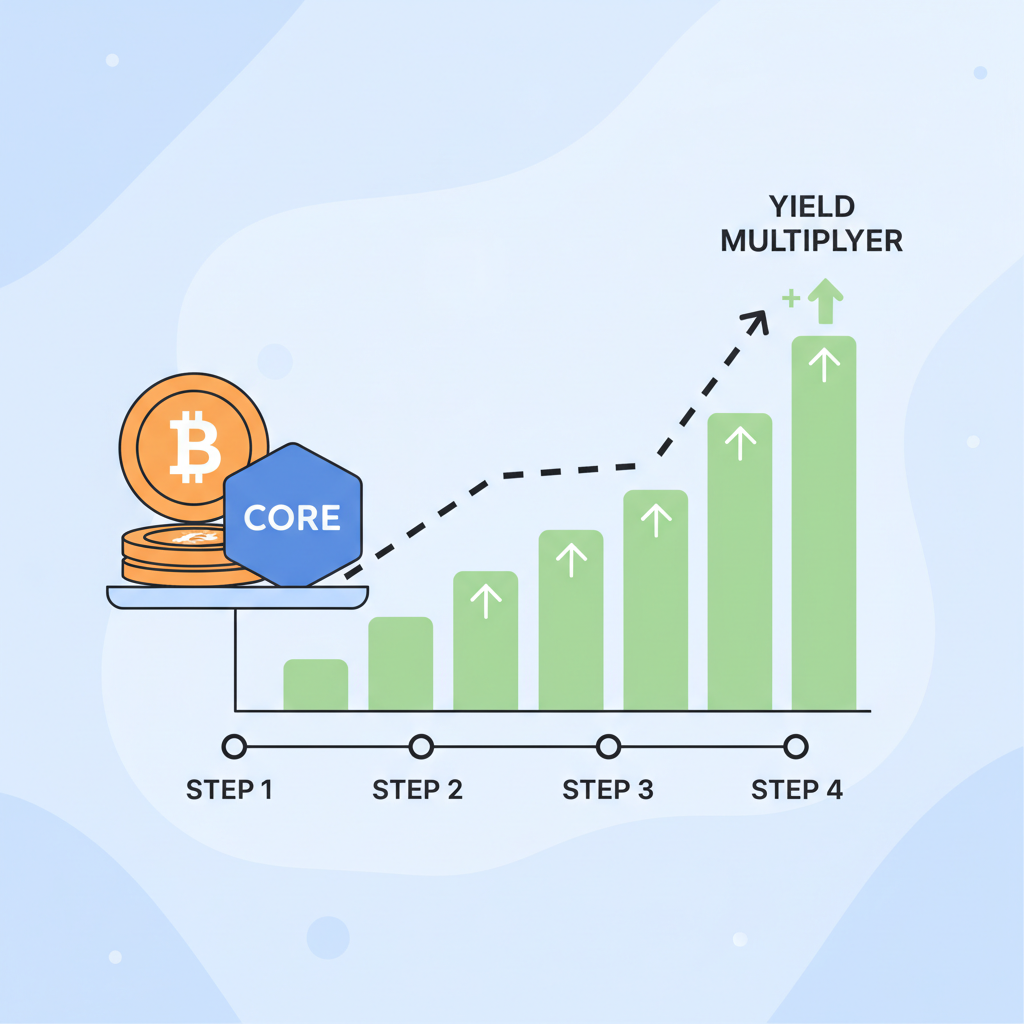
Dual staking on CoreDAO is straightforward yet powerful: deposit BTC and pair it with CORE tokens based on a favorable ratio to multiply base staking rates- up to 1x or more depending on tiers. This isn't hype; it's a verifiable boost, as outlined in CoreDAO's docs. BTC stakers earn CORE rewards daily, maintaining full liquidity for DeFi plays like lending or trading.
Imagine staking BTC at $67,168.00 alongside CORE; the combo enhances APYs without exposing you to impermanent loss traps common elsewhere. Platforms like Babylon offer native BTC staking, but CoreDAO's dual model adds leverage through CORE exposure, all while keeping BTC unlocked. For yield stackers, this is BTCfi liquid staking at its pragmatic best- balanced risk, tangible returns.
- Stake BTC solo for base yields.
- Pair with CORE for tiered multipliers.
- Earn daily CORE, redeem BTC anytime.
Volatility modeling shows dual staking smooths returns; CORE's correlation with BTC activity provides a buffer. In 2026's revenue-focused era, this positions CoreDAO as a coredao lst leader for btcfi liquid staking.
stCORE and the Liquid Staking Ecosystem on CoreDAO
Complementing BTC strategies, stCORE offers CORE holders liquidity via a 1: 1 pegged liquid staking token. Stake CORE, receive stCORE, and deploy it across DeFi while accruing network security rewards. This creates a symbiotic loop: BTC inflows via dual staking bolster the chain, enhancing stCORE yields indirectly.
Bitcoin (BTC) Price Prediction 2027-2032
Conservative to optimistic scenarios factoring in CoreDAO staking yields, BTC DeFi growth, and market cycles (2026 baseline: ~$70,000)
| Year | Minimum Price | Average Price | Maximum Price | YoY % Change (Avg) |
|---|---|---|---|---|
| 2027 | $55,000 | $95,000 | $150,000 | +35.7% |
| 2028 | $90,000 | $150,000 | $250,000 | +57.9% |
| 2029 | $120,000 | $220,000 | $380,000 | +46.7% |
| 2030 | $160,000 | $300,000 | $550,000 | +36.4% |
| 2031 | $220,000 | $420,000 | $750,000 | +40.0% |
| 2032 | $300,000 | $550,000 | $1,000,000 | +30.9% |
Price Prediction Summary
Bitcoin's price is forecasted to experience substantial growth from 2027-2032, propelled by the 2028 halving, expanding BTC yield opportunities via CoreDAO's dual staking despite lstBTC deprecation, institutional adoption, and DeFi innovations. Average prices could surge over 7x to $550,000 by 2032 in bullish scenarios, with min/max reflecting bearish corrections and optimistic peaks.
Key Factors Affecting Bitcoin Price
- 2028 Bitcoin halving increasing scarcity and historical bull cycles
- CoreDAO's dual staking and stCORE enhancing BTC yields without lockups
- Regulatory advancements favoring institutional BTC adoption
- Technological BTCfi growth (e.g., Power Grid Modules, revenue flywheels)
- Macro trends, competition, and market cap expansion to $10T+ potential
Disclaimer: Cryptocurrency price predictions are speculative and based on current market analysis. Actual prices may vary significantly due to market volatility, regulatory changes, and other factors. Always do your own research before making investment decisions.
Yields calculate from staking rewards post-fees, accumulating seamlessly. For BTC holders eyeing btc yields without lockups, CoreDAO's coredao staking guide 2026 essentials boil down to liquidity first, revenue second. No lockups mean you navigate dips- like potential pullbacks from $67,168.00- with agility, stacking yields resiliently.
This ecosystem isn't flawless; monitor CORE/BTC ratios for optimal entry. Yet, as a risk specialist, I see it as a grounded path forward, preserving capital amid BTC's $1,238.00 24-hour climb.
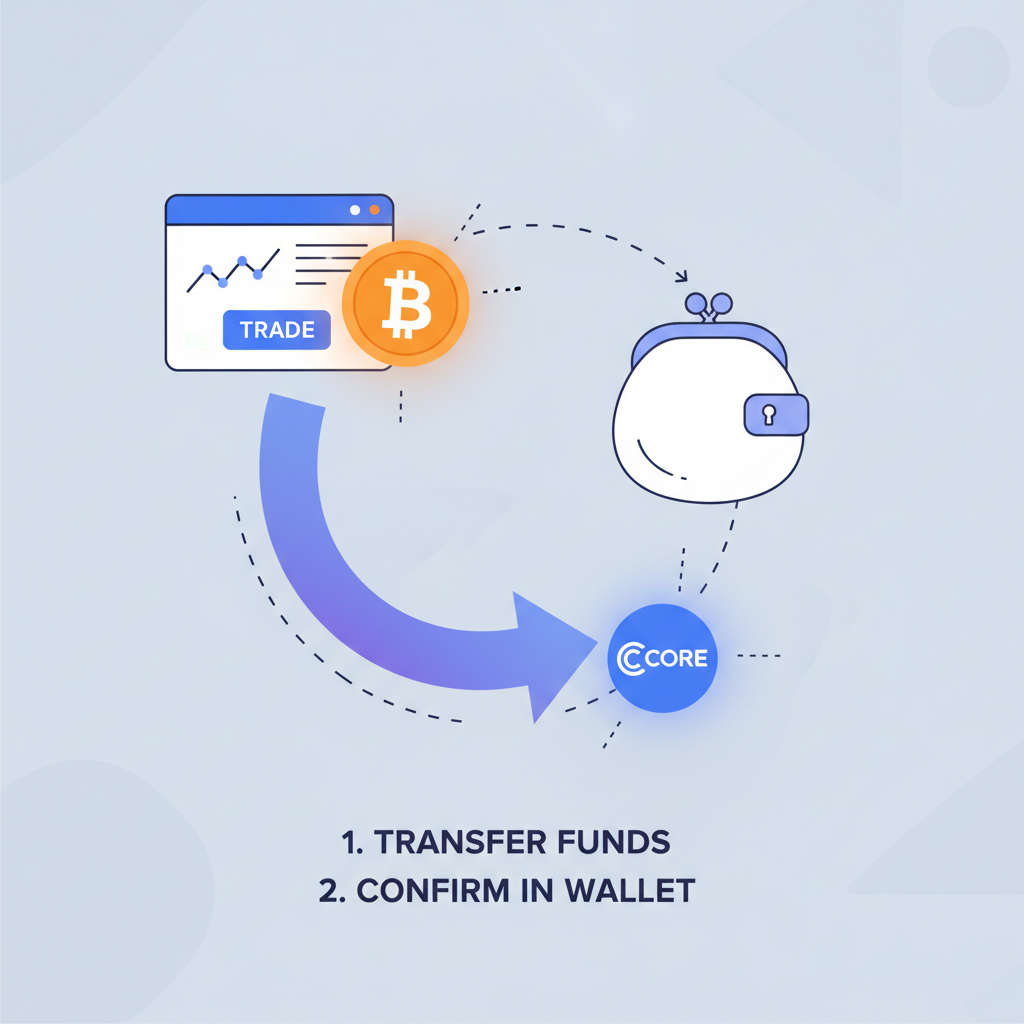
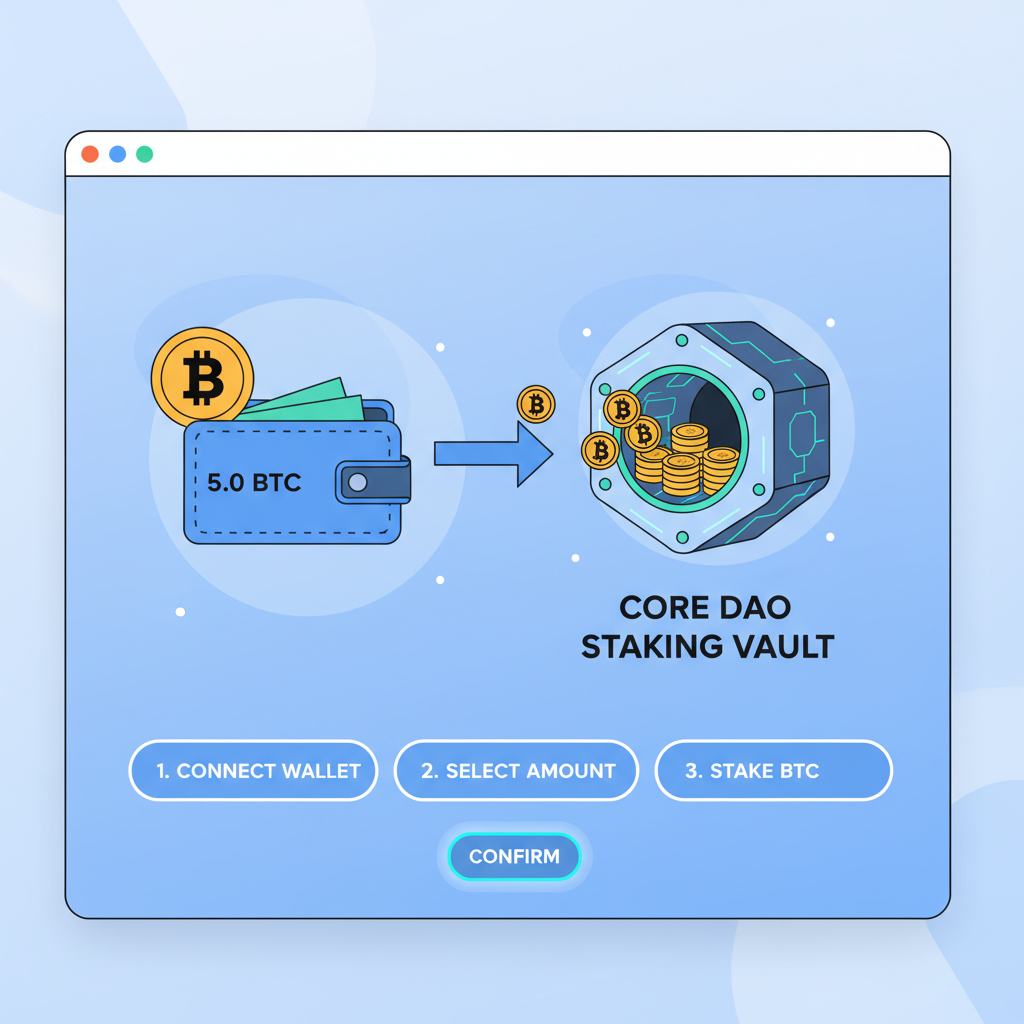
Practical entry points matter more than promises, so let's break down implementing these strategies without overcomplicating. Dual staking starts with bridging BTC to CoreDAO via official bridges, then pairing with CORE at ratios that unlock tiered boosts. Base BTC staking delivers solid foundation yields; adding CORE scales them predictably, all while staked BTC remains redeemable on demand.
Boost BTC Yields: Dual Staking Guide on Core DAO


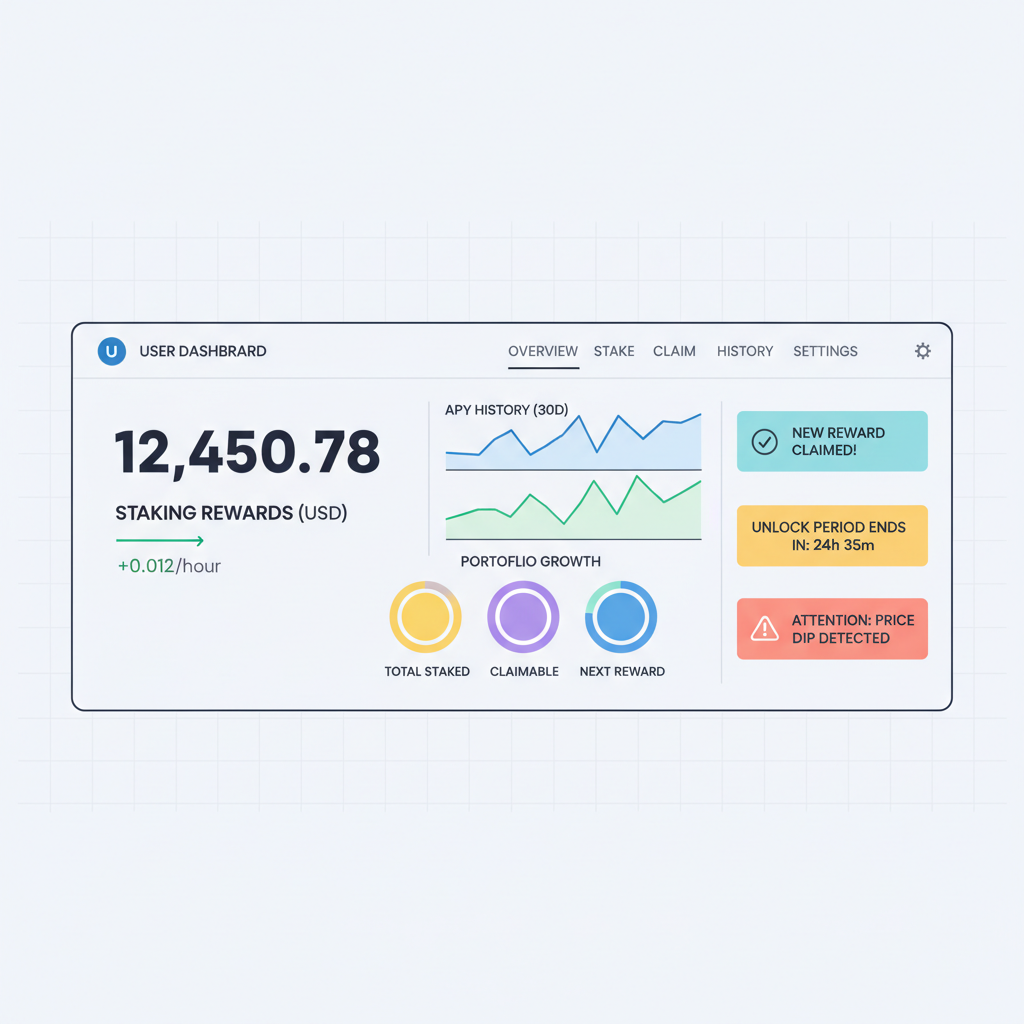

stCORE fits yield stackers layering positions: stake CORE for stCORE, lend it on CoreDAO protocols, or pair in liquidity pools for compounded APYs. This liquidity preserves optionality during BTC's swings from $65,839.00 lows to $68,318.00 peaks. As yields derive from real network activity, not inflated incentives, they hold up in revenue-focused 2026.
Risks in CoreDAO BTCfi: Volatility Modeling and Safeguards
Bitcoin at $67,168.00 tempts aggressive plays, but my FRM lens flags correlated risks. Dual staking exposes you to CORE price fluctuations alongside BTC; a CORE dip could trim effective yields. Yet, transparency shines: documented ratios and daily accruals let you model scenarios. Use volatility hedges like short-term BTC calls or diversified LSTs elsewhere to buffer.
| Staking Option | Liquidity | Rewards | Risk Level |
|---|---|---|---|
| Dual BTC and CORE | Full (no lockups) | CORE daily, tiered multipliers | Medium (COREREW exposure) |
| stCORE | Full via LST | Network security yields | Low |
| Legacy lstBTC (deprecated) | Was full | CORE daily | N/A |
Capital preservation rules: allocate no more than 20-30% of BTC portfolio here initially. Monitor 24-hour metrics like BTC's and $1,238.00 gain for entry signals. CoreDAO's shift from lstBTC deprecation to these options signals maturity, reducing smart contract risks through audited upgrades like Fusion.
Opinion: In BTCfi liquid staking, CoreDAO edges competitors by tying yields to revenue flywheels, not token dumps. Babylon's native staking shines for purists, Pendle's yield tokens for traders, but CoreDAO's dual model uniquely amplifies BTC without lockups, suiting conservative stackers.
Yield Stacking Strategies for 2026 BTC Holders
Stack smartly: start with dual staked BTC earning CORE, swap portions to stCORE for DeFi deployment, recycle rewards into more BTC pairs. This loops revenue, mirroring CoreDAO's roadmap. At current BTC pricing, even modest 5-10% APYs compound meaningfully over quarters, outpacing HODLing amid 1.88% daily ups.
- Bridge BTC to CoreDAO.
- Acquire CORE via DEXes.
- Deposit into dual pools per tier guides.
- Monitor via dashboards, auto-compound.
- Exit fluidly on rallies past $68,318.00.
Pragmatism prevails: test small, scale on proven revenue traction. Bitcoin Power Grid Modules loom as 2026 catalysts, standardizing BTCfi and funneling value to stakers.
CoreDAO embodies btc yields without lockups, evolving bitcoin liquid staking tokens into revenue engines. As BTC consolidates post its $67,168.00 mark, these tools offer grounded participation in BTCfi's ascent. Stake selectively, preserve first, and let liquidity unlock the rest.




No comments yet. Be the first to share your thoughts!