


In the evolving landscape of decentralized finance, yield stacking with LSTs represents a pinnacle of capital efficiency. Imagine staking your ETH once, receiving a liquid staking token (LST) like stETH at $1,993.75, and then deploying it across lending protocols, liquidity pools, and borrowing loops without ever unstaking. This approach, often called ‘stake, borrow, LP all from one capital pool, ‘ amplifies returns while maintaining staking rewards. As ETH trades at $1,993.84 with a 2.25% daily gain, LSTs such as rETH at $2,311.48 underscore their appreciating value, driven by embedded staking yields.

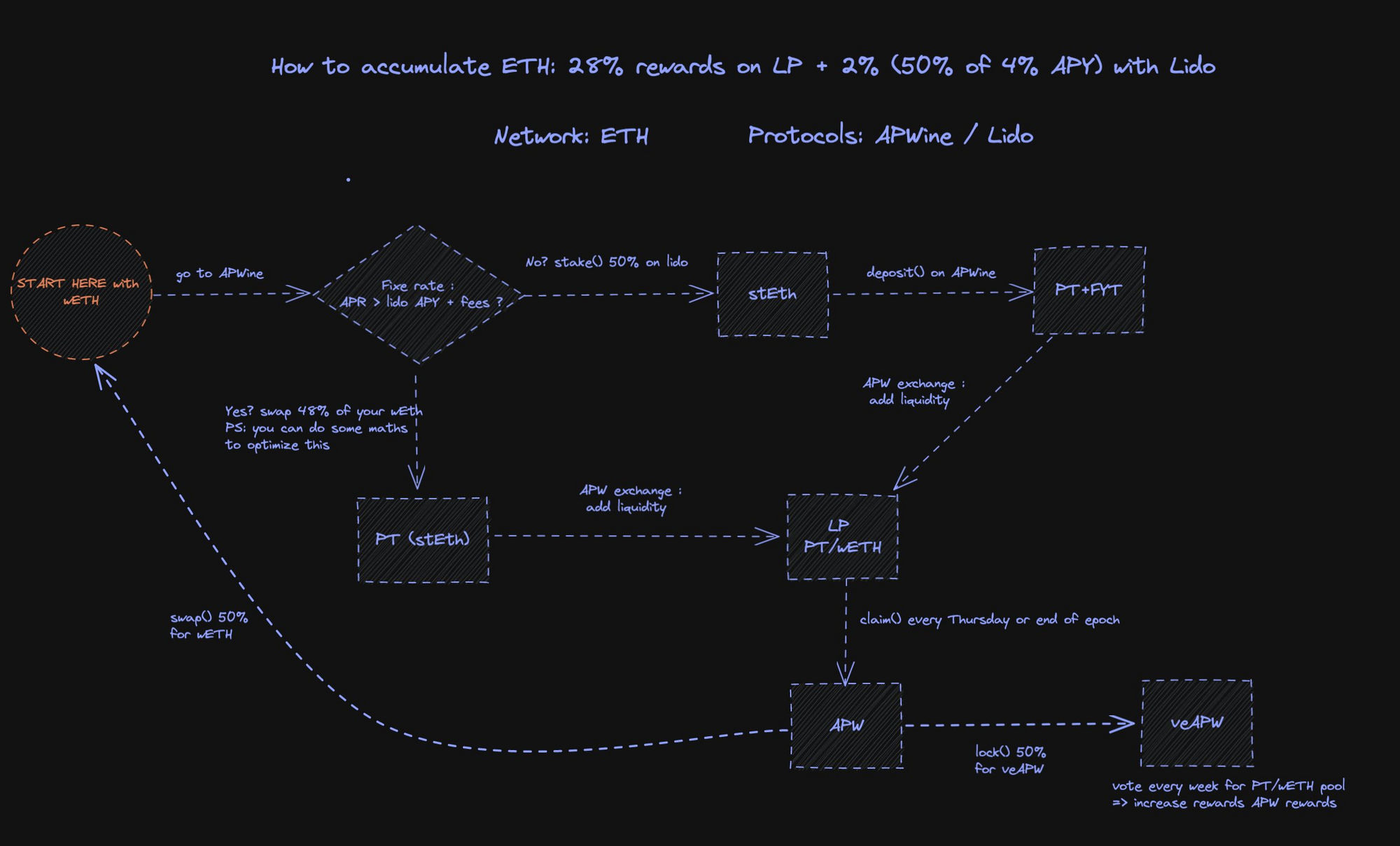
LSTs bridge the gap between illiquid staking and DeFi composability. Protocols like Lido, commanding 28% of staked ETH worth $24 billion, issue stETH that mirrors ETH’s price closely while accruing rewards. Rocket Pool’s rETH, up 2.42% today to $2,311.48, offers a decentralized alternative where node operators need just 8 ETH to participate. These tokens aren’t mere receipts; they’re productive assets ready for liquid staking yield strategies.
LSTs as the Foundation of DeFi Capital Efficiency
Traditional staking locks capital, yielding around 3-4% APR on Ethereum but sidelining it from broader DeFi opportunities. LSTs change this dynamic. By design, they maintain LST DeFi composability, allowing seamless integration into ecosystems built for ERC-20 tokens. For instance, 33% of Lido’s stETH circulates actively in DeFi, powering everything from collateralized loans to automated market makers.
This efficiency isn’t theoretical. Data shows LSTs boosting overall yields by 5-15% through layering, depending on risk tolerance. Yet, my conservative stance prioritizes capital preservation: always assess oracle reliability and liquidation thresholds before looping positions. Platforms like DeFi Saver enable up to 10x leveraged ETH exposure via LSTs in one transaction, but such amplification demands vigilant monitoring.
Current Market Data for LSTs and Related Tokens (Feb 16, 2026)
| Token | Price (USD) | 24h Change | 24h High (USD) | 24h Low (USD) |
|---|---|---|---|---|
| ETH | $1,993.84 | 📈 +2.25% | $2,019.78 | $1,940.44 |
| stETH | $1,993.75 | 📈 +2.25% | $2,018.65 | $1,940.42 |
| rETH | $2,311.48 | 📈 +2.42% | $2,338.15 | $2,250.33 |
| LDO | $0.347147 | 📈 +3.24% | $0.347209 | $0.33398 |
| RPL | $2.90 | 📈 +69.59% | $3.15 | $1.71 |
Stake Once, Deploy Everywhere: Core Yield Stacking Mechanics
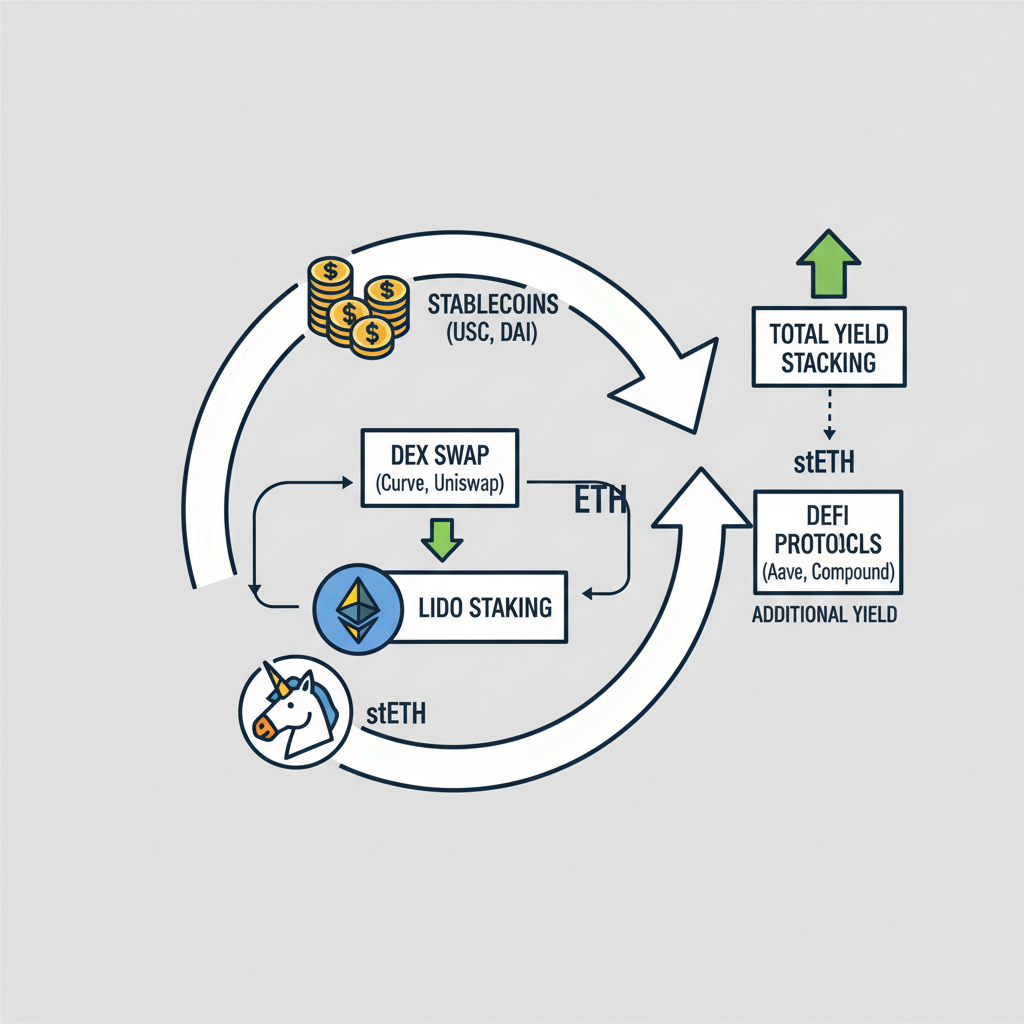
The beauty of stETH yield stacking lies in its recursive nature. Start by staking ETH on Lido for stETH. Deposit stETH as collateral on Aave or similar, borrow stablecoins at low rates (often under 2%), and swap those into more ETH or LSTs to restake. This ‘borrow loop’ can push effective APYs toward 10% and, combining staking rewards with lending interest.
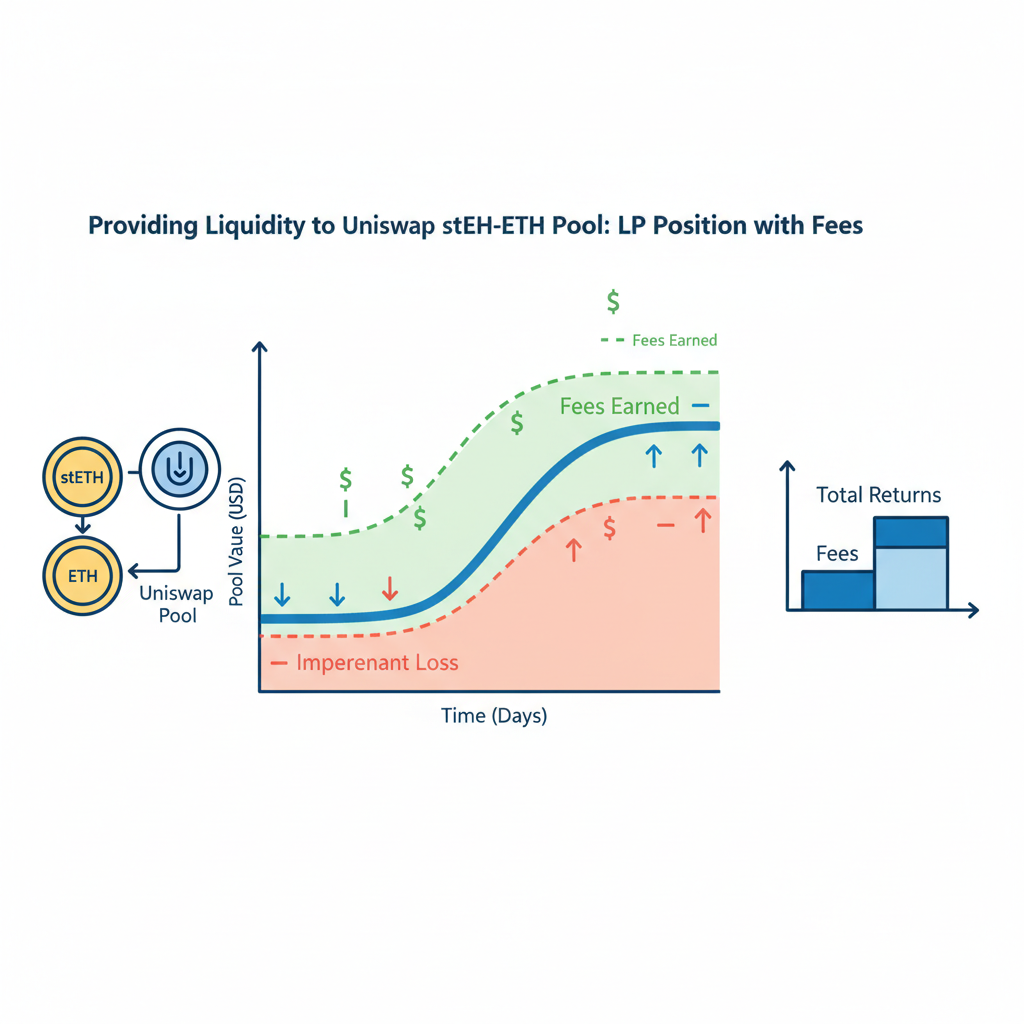
Next layer: liquidity provisioning. Pair your LST with ETH or USDC on Uniswap V3, earning fees that rival 20% APR in volatile pairs. Tools like Lido GGV automate this, deploying stETH or wstETH into premier protocols for compounded returns, with TVLs exceeding $70 million. For wstETH borrow LP plays, platforms now accept it at 0% borrow rates against staked positions, adding ~1% APY while retaining control. Read more on how LSTs enable sustainable stacking.
Consider a practical allocation: 50% LST in lending for borrow power, 30% in concentrated LP positions, 20% held for pure staking accrual. Current rETH pricing at $2,311.48 reflects not just ETH’s $1,993.84 base but overlaid rewards, making it ideal for maximize LST returns. Risks mount with leverage, though; slashing events could dent LST value, and smart contract exploits loom larger across protocols.
Navigating Risks in LST-Driven Yield Strategies
While enticing, DeFi capital efficiency LST demands precision. Liquidity risks arise if LST-ETH pegs diverge during volatility, as seen in past depegs. Borrowing amplifies this: a 5% ETH drop at 3x leverage nears liquidation. My data-driven advice? Cap leverage at 2x, diversify LST issuers, and use health factor trackers religiously. Lido’s dominance aids liquidity but introduces centralization concerns; Rocket Pool counters with permissionless nodes.
Slashing remains a tail risk, though mitigated by diversified validator sets in protocols like Rocket Pool. With RPL surging 69.59% to $2.90, node operator incentives align for network security, but over-reliance on any LST issuer warrants caution.
Step-by-Step Yield Stacking: A Conservative Blueprint
To harness yield stacking LSTs without undue exposure, follow a measured path prioritizing low leverage and blue-chip protocols. This blueprint targets 8-12% effective APY, blending staking rewards with lending and LP fees while keeping liquidation buffers above 1.5x.
Yield Stacking with LSTs: Stake, Borrow, Loop & LP from One ETH Pool
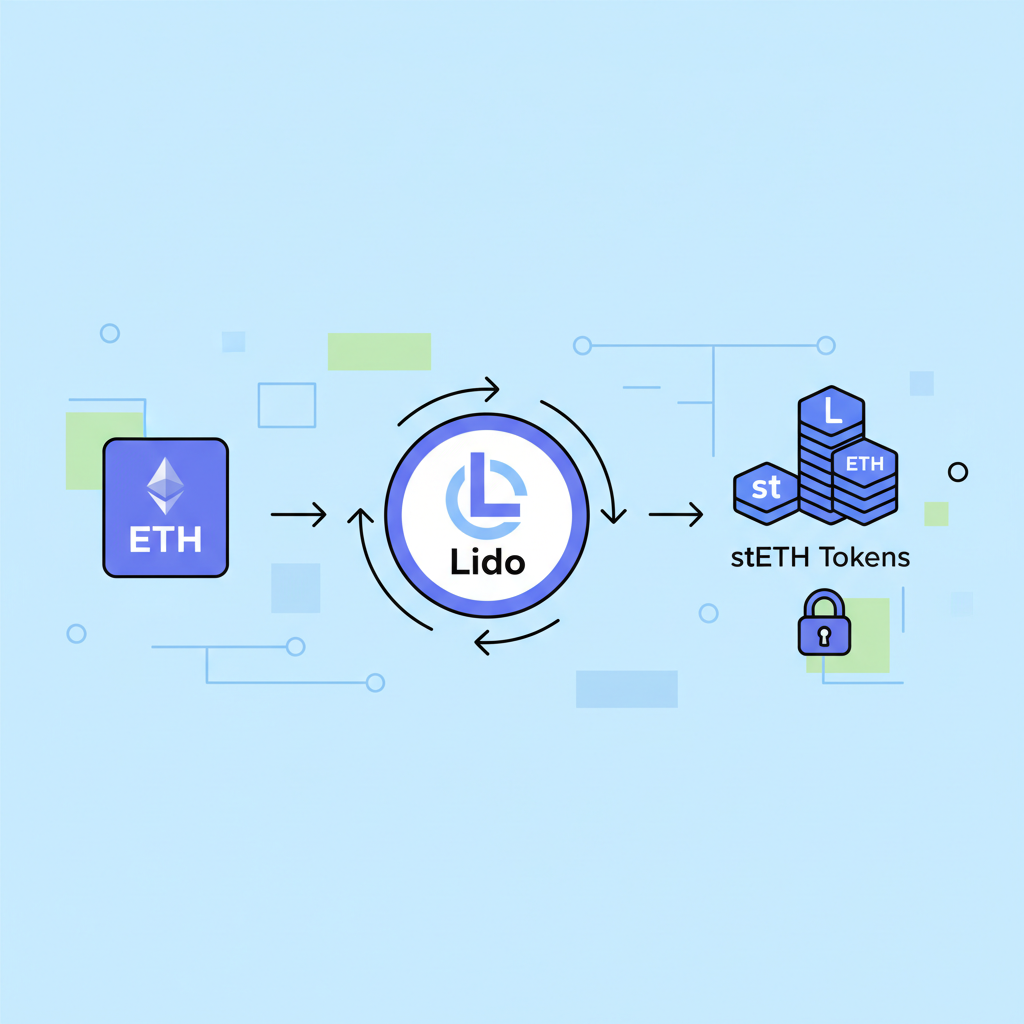
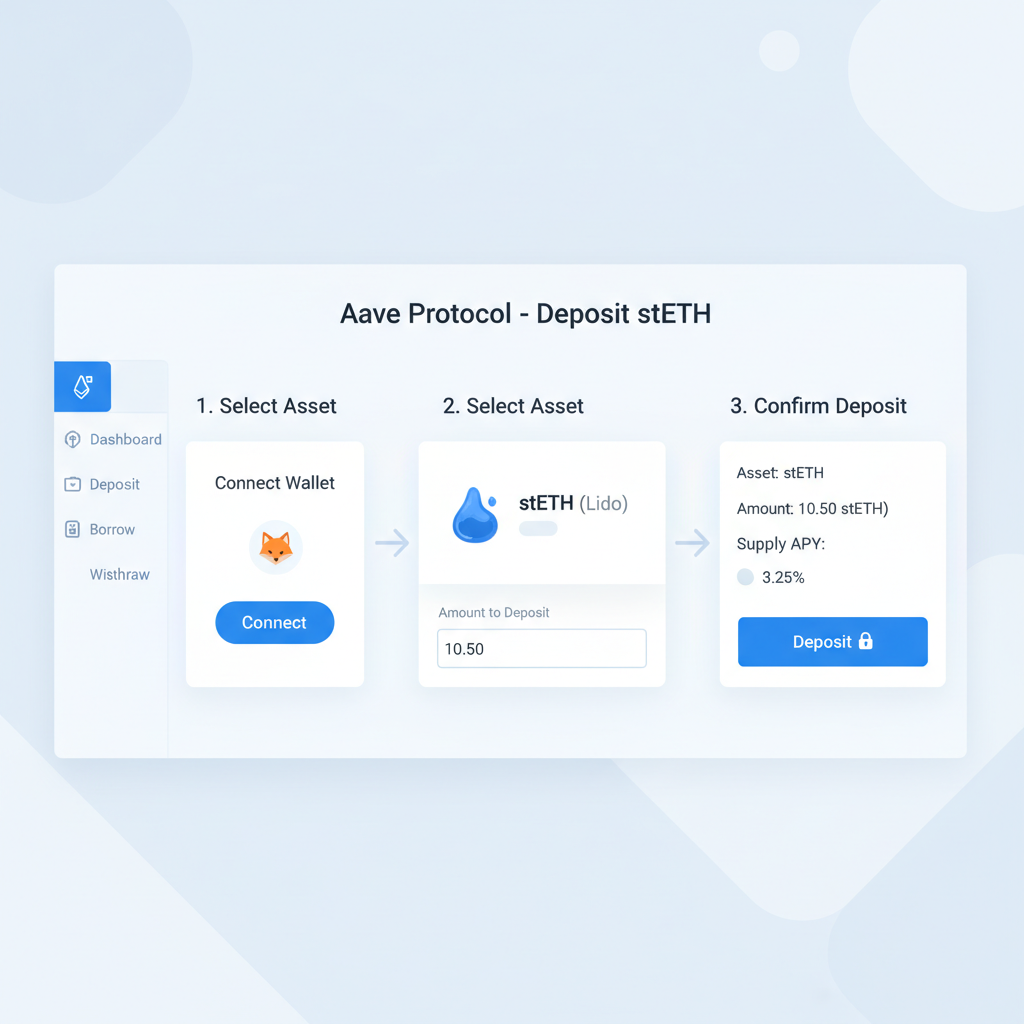
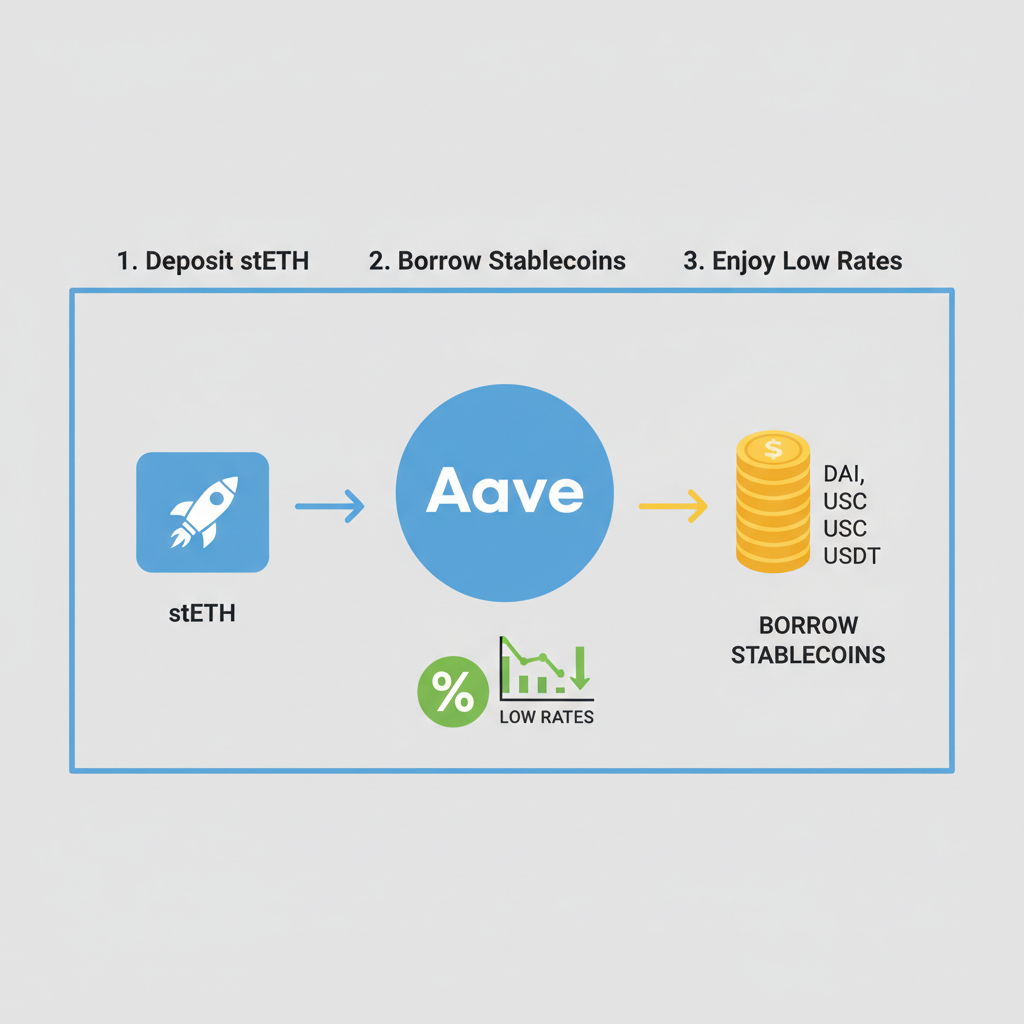
Execution demands tools like DeFi Saver for one-click loops or Lido GGV for automated deployment, where $70.3M TVL reflects proven traction. For LST DeFi composability, wstETH’s non-rebasing wrapper suits LP positions, now collateralized at 0% borrow rates on select platforms, layering ~1.07% APY atop base yields. Yet, recursive loops amplify oracle deviations; a 2% stETH-ETH depeg at $1,993.75 versus ETH’s $1,993.84 could trigger margin calls.
Explore detailed tactics in our guide on maximizing yield stacking with LSTs.
Advanced Plays: Leveraged LST Loops and LP Optimization
Beyond basics, liquid staking yield strategies evolve with restaking and concentrated liquidity. EigenLayer’s restaking vaults accept LSTs like rETH at $2,311.48, layering points-based rewards atop staking APRs. Pair this with Uniswap V3’s narrow-range LPs for stETH-ETH, where fees compound to 15-25% in high-volume corridors.
Conservative twist: allocate no more than 20% to leveraged loops. At current ETH levels of $1,993.84, a 2x position via borrowed assets sustains staking accrual while borrowing costs hover below yields. Platforms like Sturdy exemplify LST collateral efficiency, enabling seamless DeFi deployment. LDO at $0.347147, up 3.24%, signals governance confidence amid 33% DeFi utilization.
Yield Stacking Strategies Comparison
| Strategy | Estimated APY | Risk Level | Recommended Leverage |
|---|---|---|---|
| Pure Staking | 3-4% | 🟢 Low | 1x |
| LST Lending | 5-7% | 🟡 Medium | 1.5x |
| Borrow Loop | 8-12% | 🟠 High | 2x |
| LP and Loop | 12-20% | 🔴 Very High | 2x max |
Real-world validation comes from Ankr’s optimal loops with LSTs like ankrBNB, mirroring Ethereum dynamics. Yet, Galaxy’s onchain yield report cautions against over-optimization; stablecoin yields often outpace aggressive LST stacks during downturns.
Market Outlook and Preservation Tactics
As of February 16,2026, ETH’s climb to $1,993.84 with rETH’s premium at $2,311.48 positions LSTs for sustained appreciation. RPL’s volatility, hitting $3.15 high after a 69.59% surge to $2.90, underscores operator rewards but flags momentum risks. For maximize LST returns, hedge with diversified LST baskets: 50% Lido, 30% Rocket Pool, 20% emerging like EigenLayer LSTs.
Preservation protocols include dynamic position health checks via Instadapp and insurance like Nexus Mutual for smart contract cover. Cap drawdowns by setting auto-deleverage triggers at 10% collateral dips. In volatile regimes, pivot to passive holding; rETH’s embedded yield accrues regardless.
Yield stacking transforms static staking into a dynamic engine, but success hinges on disciplined execution. With LSTs like stETH trading pegged at $1,993.75, the infrastructure stands ready for those balancing ambition with prudence. Platforms such as Lstfi equip you with analytics to track these flows, ensuring informed navigation of DeFi’s yield frontier.
About the Author