

Liquid staking tokens (LSTs) have fundamentally changed how DeFi participants approach yield generation. Instead of locking assets away in traditional staking, LSTs let you earn staking rewards while simultaneously unlocking your capital for use across the broader DeFi ecosystem. This dual utility has fueled a new wave of strategies known as yield stacking with LSTs, where users compound returns by layering multiple yield sources. In this guide, we’ll break down the mechanics, risks, and real opportunities for maximizing LST yields across multiple protocols.
How Liquid Staking Tokens Power Multi-Protocol Yield Stacking
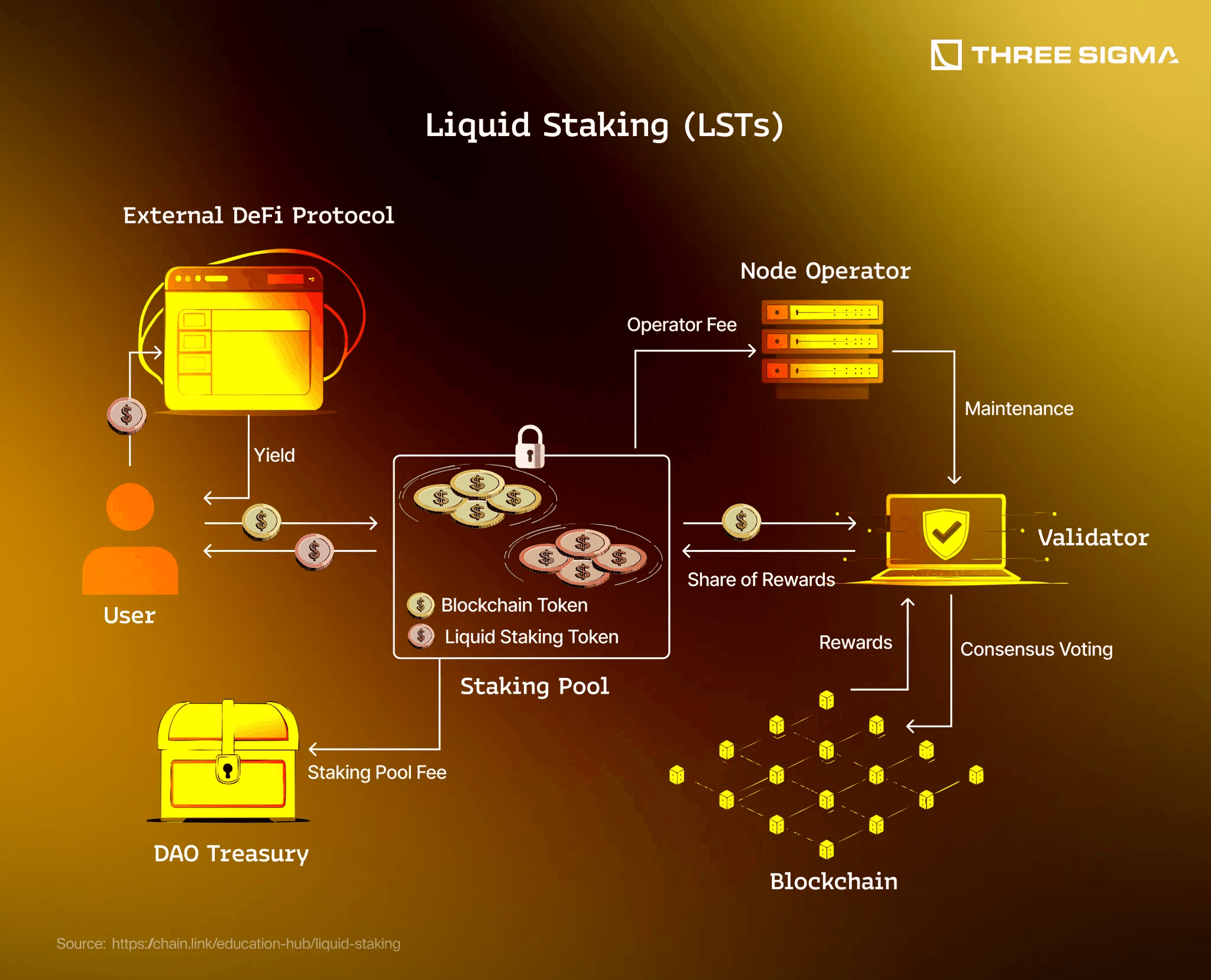
The core innovation behind liquid staking is simple yet profound: when you stake an asset like Ethereum through a liquid staking protocol (think Lido or Rocket Pool), you receive an LST (such as stETH or rETH) representing your claim on the underlying staked asset plus accrued rewards. Unlike traditional staking, where your tokens are locked and illiquid, these LSTs remain fully transferable and usable across DeFi.
This unlocks a powerful feedback loop. Not only do you continue to earn base network rewards (e. g. , ETH staking yield), but you can also deploy your LSTs into other protocols, liquidity pools, lending platforms, restaking services, to generate additional layers of income. The result? Compound rewards DeFi, where each layer amplifies your total return.
Key Strategies to Maximize LST Yield Across DeFi
The most effective sustainable DeFi yield stacking approaches with LSTs typically combine several tactics:
- Restaking for Extra Rewards: Platforms like EigenLayer let you restake your LSTs to secure additional services or networks, earning further incentives on top of standard staking rewards. This double-dipping is at the heart of advanced liquid staking token DeFi strategies.
- Lending and Borrowing: Use your LSTs as collateral on lending protocols to access more capital or leverage. For example, deposit stETH into Aave or similar platforms to borrow stablecoins while still accruing ETH staking rewards, a classic move in LST farming and lending.
- Liquidity Provision: Pair your LST with its underlying token (like stETH/ETH) in a DEX liquidity pool. Earn swap fees and potentially liquidity mining incentives while maintaining exposure to both assets.
- Yield Aggregators: Platforms like Yearn Finance automate strategy selection for optimal yields by routing your deposited LSTs through the most profitable combinations available.
This multi-pronged approach enables users to maximize their capital efficiency, earning from network security while simultaneously tapping into protocol incentives and trading fees.
Navigating Risks: What Every Yield Stacker Needs to Know
No strategy is without risk. The more layers of protocol integration involved, the greater the potential exposure to smart contract vulnerabilities and market volatility. Key risks include:
- Smart Contract Bugs: Each new protocol introduces another attack surface; always assess audits and track records.
- Market Volatility and Impermanent Loss: When providing liquidity (especially in volatile pairs), changing prices can erode gains via impermanent loss or liquidation risk if using leverage.
- Liquidity Constraints: Not all LSTs are equally liquid; sudden market moves could impact exit options or cause slippage when unwinding positions.
Diversifying across reputable protocols and monitoring health factors are essential parts of any sustainable yield stacking strategy. For deeper dives into specific risks and mitigation tips, see our detailed guide on sustainable DeFi yield stacking.
Despite the risks, the upside of maximizing LST yield remains compelling for diligent DeFi participants. The secret is not just in stacking more protocols, but in understanding how each layer interacts with your overall risk profile and return expectations. Advanced users often rotate between restaking, lending, and liquidity provision based on prevailing market conditions and protocol incentives. This dynamic allocation is the hallmark of sustainable DeFi yield stacking.
Comparing Major LST Yield Stacking Approaches
To help clarify how these strategies stack up against each other, here’s a quick comparison of their core mechanics, potential returns, and associated risks:
Comparison of LST Yield Stacking Strategies
| Strategy | How It Works | Potential Yield Sources | Key Risks | Example Protocols |
|---|---|---|---|---|
| Restaking for Additional Rewards | Use LSTs to secure additional protocols, earning extra rewards on top of base staking. | Original staking rewards, restaking rewards | Smart contract vulnerabilities, increased protocol risk | EigenLayer |
| Providing Liquidity in DeFi Pools | Deposit LSTs into DEX liquidity pools to earn trading fees and incentives. | Staking rewards, trading fees, liquidity mining incentives | Impermanent loss, market volatility, smart contract risk | Uniswap, Curve |
| Utilizing Yield Aggregators | Deposit LSTs into platforms that automatically optimize and compound yields. | Staking rewards, aggregator-optimized returns | Smart contract vulnerabilities, strategy risk | Yearn Finance |
| Leveraging LSTs as Collateral | Use LSTs as collateral to borrow assets, enabling leverage or additional investments. | Staking rewards, borrowed asset yield, leveraged returns | Liquidation risk, market volatility, protocol risk | Aave, MakerDAO |
For those seeking to optimize every layer, consider leveraging automated tools or dashboards that monitor yields across protocols in real time. Platforms like Yearn can rebalance your positions dynamically, but always verify smart contract safety before depositing significant capital.
Best Practices for Sustainable Yield Stacking
- Stay Informed: Protocol incentives and APYs change frequently. Subscribe to governance updates and community channels for timely insights.
- Diversify Exposure: Avoid overconcentration in a single protocol or asset type. Spread allocations across multiple reputable platforms.
- Monitor Health Factors: If using LSTs as collateral, keep an eye on your loan-to-value (LTV) ratios to avoid liquidations during market swings.
- Avoid Chasing Unsustainable Yields: Extremely high APYs often signal higher risk or unsound tokenomics. Prioritize protocols with strong track records and transparent reward structures.
The landscape for yield stacking with LSTs is evolving rapidly as new integrations emerge across DeFi. Whether you’re focused on ETH staking or exploring newer assets, the principles remain: balance opportunity with caution, use automation wisely, and never lose sight of underlying risks.
If you’re ready to deepen your strategy or want actionable steps tailored to current market dynamics, check out our latest guide on how to maximize yield stacking with liquid staking tokens in DeFi.
The future belongs to those who can adapt their approach as protocols mature. With proper diligence and ongoing education, you can unlock compounding rewards while managing risk, making LST farming and lending a cornerstone of modern DeFi portfolios.




No comments yet. Be the first to share your thoughts!