
Pick the right liquid staking token
Liquid Staking works best as a clear sequence: define the constraint, compare the realistic options, test the tradeoff, and choose the path with the fewest hidden costs. That order keeps the advice usable instead of decorative. After each step, pause long enough to check whether the recommendation still fits the reader's actual situation. If it depends on perfect timing, unusual access, or a best-case budget, include a simpler fallback.
| Factor | What to check | Why it matters |
|---|---|---|
| Fit | Match the option to the primary use case. | A good deal still fails if it does not fit the job. |
| Condition | Verify age, wear, and service history. | Hidden condition issues erase upfront savings. |
| Cost | Compare purchase price with likely upkeep. | The cheapest option is not always the lowest-cost option. |
Set up your staking wallet securely
Liquid staking requires connecting a self-custody wallet to a protocol interface. This action transfers your assets to a smart contract. If your wallet is compromised or you connect to a malicious site, your funds are lost. There is no customer support to reverse these transactions. Treat this setup phase with the same caution as moving cash into a physical vault.
1. Install a secure wallet
Download a reputable non-custodial wallet from the official developer website. Avoid third-party app stores or random search results. After installation, write down your 12 or 24-word recovery phrase on paper. Store it in a fireproof location. Never store this phrase digitally on your computer or phone.
2. Verify the protocol URL
Navigate to the liquid staking protocol’s website. Before connecting your wallet, verify the URL matches the official source. Check for subtle misspellings or different domain extensions. Hackers often create phishing sites that look identical to legitimate platforms. A single wrong character can cost you everything.
3. Connect your wallet
Click the "Connect Wallet" button on the protocol interface. Select your wallet provider from the list. Your wallet will prompt you to sign a message. This signature proves you own the wallet without revealing your private key. Do not sign any transaction that asks you to "approve unlimited spend" unless you understand the specific allowance limits.
4. Fund and stake
Transfer the cryptocurrency you wish to stake into your wallet. Navigate to the staking dashboard on the protocol. Enter the amount you want to lock. Review the estimated annual percentage yield (APY) and the lock-up period. Confirm the transaction in your wallet. Wait for the blockchain confirmation, which may take several minutes.
Install a reputable non-custodial wallet from the official developer website. Write down your recovery phrase on paper and store it securely. Never store this phrase digitally.

Navigate to the liquid staking protocol’s website. Verify the URL matches the official source exactly. Check for subtle misspellings or different domain extensions to avoid phishing sites.
Click "Connect Wallet" and select your provider. Sign the message to prove ownership. Do not sign transactions asking for unlimited spend approval without understanding the limits.

Transfer cryptocurrency into your wallet. Enter the stake amount on the dashboard. Review the APY and lock-up period. Confirm the transaction and wait for blockchain confirmation.


As an Amazon Associate, we may earn from qualifying purchases.
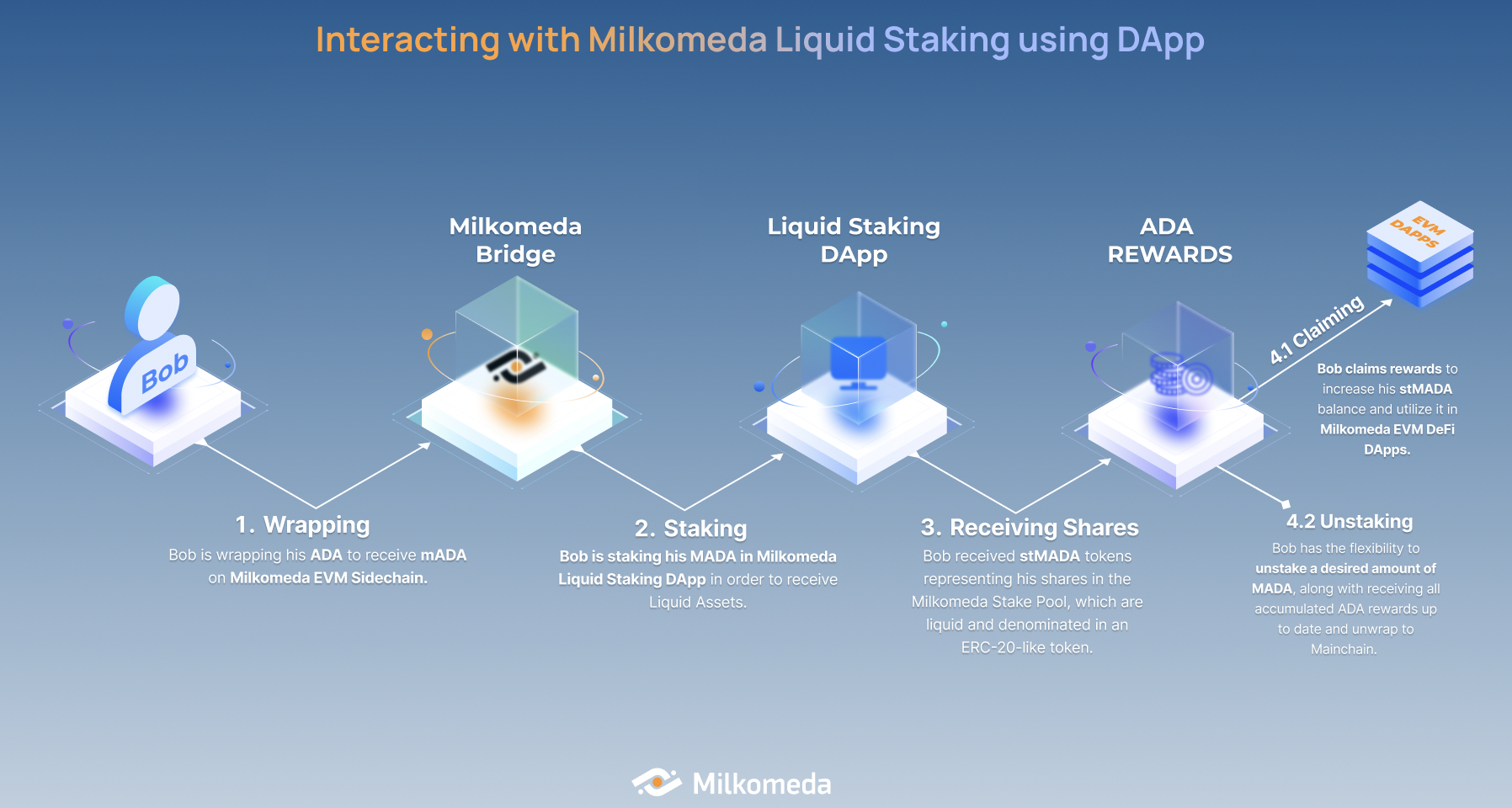
Deploy receipt tokens in DeFi
Liquid Staking works best as a clear sequence: define the constraint, compare the realistic options, test the tradeoff, and choose the path with the fewest hidden costs. That order keeps the advice usable instead of decorative. After each step, pause long enough to check whether the recommendation still fits the reader's actual situation. If it depends on perfect timing, unusual access, or a best-case budget, include a simpler fallback.
Watch for slashing and smart contract risks
Liquid staking protocols offer yield, but they introduce specific technical risks that can result in the permanent loss of staked principal. Unlike traditional savings accounts, there is no insurance or guarantee against protocol failure or validator misconduct. In 2026, the landscape remains complex, with new restaking mechanisms introducing additional layers of smart contract exposure.
Slashing occurs when a validator node violates network consensus rules, leading to the penalty of a portion of its staked assets. This is not a temporary freeze; it is a permanent deduction. If you are using a liquid staking token (LST), your underlying stake is managed by professional validators. If those validators are slashed, the value of your LST drops accordingly, and there is no mechanism to recover the lost funds. This risk is inherent to the proof-of-stake consensus mechanism and is amplified by the complexity of multi-layer staking protocols.
Smart contract risk is equally critical. Liquid staking relies on code to manage deposits, mint derivatives, and distribute rewards. Bugs, vulnerabilities, or exploits in these contracts can lead to total loss of funds. The 2026 environment includes sophisticated restaking protocols that leverage staked assets across multiple networks, increasing the attack surface. A compromise in one layer can cascade through the entire system. Always verify the audit status of any protocol before depositing, and understand that audits are not guarantees of security.
To mitigate these risks, diversify your exposure across multiple reputable protocols rather than concentrating your stake in a single platform. Monitor validator performance and protocol health regularly. Use official documentation and verified audit reports to assess the security posture of any liquid staking provider. Remember that higher yields often correlate with higher complexity and greater risk exposure.
No comments yet. Be the first to share your thoughts!