
Choose a liquid staking protocol
Selecting a liquid staking protocol requires looking beyond headline yields. The primary goal is to preserve capital while earning rewards, which means prioritizing security audits, total value locked (TVL), and multi-chain support over the highest percentage return. High APY often signals elevated smart contract risk or unsustainable token emissions.
Start by verifying that the protocol has undergone multiple independent security audits from reputable firms. Check the TVL to ensure sufficient liquidity and network participation. Confirm that the protocol supports the specific blockchain you intend to stake on, such as Ethereum, Solana, or BNB Chain, and that the liquid tokens are widely accepted across DeFi ecosystems.
Use the comparison below to evaluate the top liquid staking protocols based on these critical metrics.
| Protocol | Chain | TVL | Audit Status |
|---|---|---|---|
| Lido | Ethereum | $20B+ | Multiple, Public |
| Rocket Pool | Ethereum | $2B+ | Multiple, Public |
| Jito | Solana | $1B+ | Multiple, Public |
| Ankr | Multi-chain | $500M+ | Regular, Public |
| Renzo | Ethereum | $500M+ | Multiple, Public |


As an Amazon Associate, we may earn from qualifying purchases.
Deposit assets and receive liquid tokens
Liquid staking works by swapping your native asset for a receipt token that represents your staked position. When you deposit ETH or SOL into a protocol, you do not lock them away in a vault where they become inaccessible. Instead, the protocol stakes the asset on the consensus layer and immediately mints a liquid staking token (LST) in your wallet. This LST tracks the value of your staked asset plus accrued rewards.
This process allows you to earn staking yield while retaining the ability to use the token in other parts of the DeFi ecosystem. You can lend the LST, trade it on a DEX, or provide it as liquidity to earn additional fees. The underlying asset continues to generate rewards, which are automatically reflected in the exchange rate between the LST and the native asset.

Open the official website of your chosen liquid staking provider. Connect your non-custodial wallet (such as MetaMask or Phantom) to the platform. Ensure you are on the correct network for the asset you intend to stake. Verify the URL and contract addresses to avoid phishing sites, as this is a high-stakes interaction involving real funds.
Before the protocol can accept your deposit, you must grant it permission to spend your tokens. This requires an on-chain approval transaction. Review the gas fees and the spending limit. Once the transaction is confirmed, the smart contract is authorized to move your assets on your behalf.
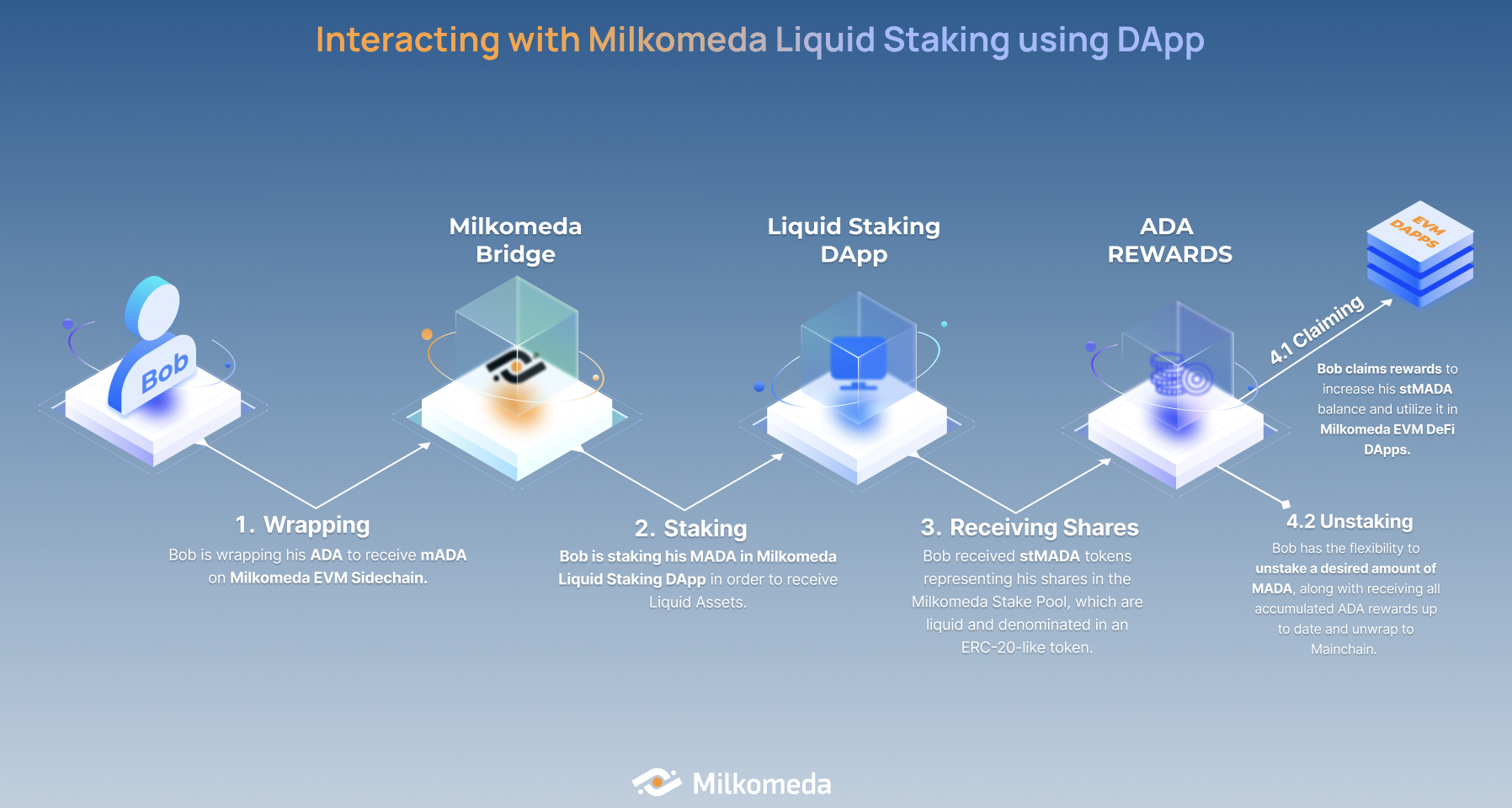
Navigate to the deposit interface and enter the amount of ETH, SOL, or other supported asset you wish to stake. The platform will display the expected amount of LST you will receive, such as stETH or jitoSOL. Confirm the transaction details and sign it with your wallet. The protocol will lock your native asset and begin the staking process.

Once the transaction is finalized, the corresponding LST will appear in your wallet balance. You now hold a token that represents your staked position. You can keep this token in your wallet to accrue staking rewards, or transfer it to a decentralized exchange to trade or provide liquidity. The value of the LST will appreciate relative to the native asset as rewards accumulate.
Deploy LSTs in DeFi yield strategies
Once your liquid staking tokens (LSTs) are in your wallet, they stop being idle assets. Instead of letting them sit in a cold storage vault, you can deploy them across decentralized finance (DeFi) protocols to generate additional yield. This process, often called "yield stacking" or "double-dipping," allows you to earn the base staking reward while simultaneously capturing trading fees or lending interest.
The most common entry point is lending protocols. By supplying your LSTs as collateral or as a yield-bearing asset, you can earn interest from borrowers. For example, depositing stETH into a lending market like Aave or Compound allows you to earn a variable interest rate while maintaining the option to withdraw your underlying ETH later. This is particularly useful for short-term liquidity needs, as noted in recent market analyses highlighting the low friction of liquid staking options for reducing opportunity costs [[src-serp-3]].
Another strategy involves providing liquidity in decentralized exchanges (DEXs). You can pair your LST with its underlying asset (e.g., stETH/ETH) in a liquidity pool. Because the ratio between the LST and the underlying asset remains relatively stable, this strategy minimizes impermanent loss compared to pairing unrelated tokens. However, you must monitor the pool's fee structure to ensure the trading fees outweigh the potential slippage from peg deviations.
Before deploying capital, always verify the smart contract audits and insurance coverage of the DeFi protocol. While the potential for compounded returns is high, smart contract risks in DeFi are significant. Start with small amounts to test the withdrawal process and fee mechanics before committing significant capital.
Check Your Peg Stability
Liquid staking tokens are designed to maintain a 1:1 peg with the underlying asset, but market conditions can cause temporary deviations. Before entering a DeFi position, check the current exchange rate of your LST against the base asset. Significant discounts may indicate network congestion or smart contract risks that could affect your yield or liquidity.
Review Protocol Risk Parameters
Different DeFi platforms have varying risk tolerances. Some may accept LSTs as collateral with a lower loan-to-value (LTV) ratio due to their volatility. Ensure you understand the liquidation thresholds and any associated fees for early withdrawal or swapping within the protocol.
Monitor Gas and Network Fees
Interacting with multiple protocols involves transaction costs. Calculate whether the expected yield justifies the gas fees, especially on high-traffic networks like Ethereum. Consider using Layer 2 solutions or alternative L1s with lower fees if available and supported by your LST provider.
Manage slashing and depegging risks
Liquid staking introduces two distinct failure modes that don't exist in standard staking: validator slashing and protocol depegging. Managing these risks requires active monitoring rather than passive holding.
Mitigate slashing exposure
Slashing occurs when a validator node violates protocol rules, resulting in the permanent loss of a portion of the staked ETH. While major protocols like Lido and Rocket Pool implement diversified validator sets to absorb individual node failures, a systemic breach or coordinated attack can still impact your yield.
To minimize this risk, spread your exposure across multiple liquid staking protocols. Do not allocate your entire portfolio to a single provider. If one protocol's validator set is compromised, the others remain unaffected. This diversification acts as an insurance policy against single-point-of-failure events.
Monitor depegging events
Liquid staking tokens (LSTs) like stETH or rETH are designed to maintain a 1:1 peg with the underlying asset. However, during periods of extreme market stress or liquidity crunches, the LST can trade at a discount. This depegging means your token is worth less than the ETH you deposited.
Monitor the premium/discount of LSTs against spot ETH. If the discount widens significantly, consider rebalancing or switching to a more stable provider. Always ensure you have enough liquid ETH reserves to cover short-term needs, avoiding the need to sell LSTs at a loss during a depeg event.
Unstake and withdraw when needed
Liquid staking tokens are designed for liquidity, but converting them back to native assets is not always instant. The withdrawal process depends entirely on the protocol you chose. Some networks offer immediate exits through secondary markets, while others require you to wait in a validator queue.
Understanding this distinction is critical for managing your capital. If you need funds for a trade or an emergency, relying on a native withdrawal queue can take days or even weeks. Here is how the process works and how to avoid getting stuck.
1. Check the withdrawal queue status
Before initiating any transaction, verify the current state of the withdrawal queue for your specific token. Native unstaking protocols often have a fixed processing time. For example, Ethereum’s native withdrawal queue can take 24 to 48 hours to clear, depending on network congestion.
Check the official documentation or the dashboard of your liquid staking provider. If the queue is full, your withdrawal will be delayed. This is not a bug; it is a security feature to prevent validator churn. If you need immediate access to your capital, do not rely on this queue.
2. Choose your exit path
You have two primary options for unstaking:
- Native Withdrawal: You send your liquid staking token back to the protocol. The protocol burns your token and waits for the validator queue to process the withdrawal. Once processed, you receive the native asset (e.g., ETH) in your wallet. This is free but slow.
- Secondary Market Sale: You sell your liquid staking token on a decentralized exchange (DEX) or centralized exchange (CEX) for stablecoins or other assets. This is instant but incurs trading fees and potential slippage.
If you are exiting to cash out, the secondary market is usually the faster route. If you are moving to another staking protocol, the native withdrawal might be more cost-effective, provided you can wait.
3. Execute the withdrawal
If you choose the native path, navigate to the "Withdraw" or "Unstake" tab in your protocol’s interface. Enter the amount of liquid staking tokens you wish to redeem. Confirm the transaction details, including the estimated time to completion.
If you choose the secondary market, swap your tokens on your preferred exchange. Be aware that liquidity varies. Large withdrawals on low-liquidity pools can result in significant price slippage. Always check the depth of the order book before executing.
4. Verify receipt of funds
Once the transaction is confirmed on-chain, monitor your wallet. For native withdrawals, you may need to wait for the queue to clear before the native asset appears. For secondary market sales, the stablecoin or native asset should appear immediately after the swap.
Keep records of your transaction hashes for tax purposes. Withdrawals from staking protocols are often taxable events, depending on your jurisdiction.
-
Check gas fees for the withdrawal transaction
-
Verify the current status of the withdrawal queue
-
Consider tax implications of the unstaking event
-
Ensure you have enough native asset for gas fees
No comments yet. Be the first to share your thoughts!