
What to expect from liquid staking in 2026
Liquid staking has moved from a niche DeFi experiment to a core infrastructure layer. The global market, valued at $168 million in 2024, is projected to reach $572 million by 2032, signaling a shift in how capital is deployed across blockchain networks Intel Market Research. This growth isn't just about volume; it's about the fundamental change in how liquidity is managed.
In 2026, the primary constraint is no longer technical feasibility but yield sustainability. Early protocols offered high returns by subsidizing staking rewards, a model that proved fragile during market downturns. The current landscape favors protocols that generate real, on-chain yield through restaking and active validator operations. Investors are looking for transparency in fee structures and clear risk disclosures rather than inflated APY promises.
The tradeoff remains simple: you trade full custody for liquidity. In 2026, the question isn't whether to stake, but which protocol offers the best balance of yield, security, and composability. With Ethereum's transition to proof-of-stake complete, the focus has shifted to maximizing the utility of staked assets without compromising network security.
Liquid staking 2026 choices that change the plan
Liquid staking protocols offer yield and liquidity simultaneously, but the mechanisms differ significantly across networks. In 2026, the choice between Ethereum, Solana, and Bitcoin staking involves distinct risk profiles and operational constraints. Understanding these tradeoffs helps you select a protocol that aligns with your specific capital strategy.
Ethereum Liquid Staking
Ethereum liquid staking remains the most mature segment, with protocols like Lido and Rocket Pool dominating market share. The primary advantage is deep liquidity; stETH and rETH are widely accepted in DeFi lending markets. However, centralization risks persist. Lido controls a significant portion of the network, which raises governance concerns. Additionally, slashing events can reduce the value of your staked assets if validators misbehave.
Solana Liquid Staking
Solana’s high throughput enables faster unstaking processes compared to Ethereum’s withdrawal queue. Protocols like Jito and Marinade offer competitive yields, often boosted by MEV (Maximal Extractable Value) rewards. The tradeoff is higher volatility in staking rewards and a smaller total value locked (TVL) ecosystem. If you prioritize speed and yield over institutional-grade stability, Solana liquid staking is a strong candidate.
Bitcoin Liquid Staking
Bitcoin liquid staking is emerging through wrapped assets and layer-2 solutions. Protocols like Lombard and Bifrost allow BTC holders to earn yield without leaving the Bitcoin ecosystem. The main drawback is complexity and counterparty risk. Since Bitcoin does not natively support staking, these protocols rely on trust-minimized bridges or custodial arrangements. Regulatory uncertainty also looms larger for Bitcoin-based staking products.
Key Metrics to Compare
When evaluating these options, focus on three core metrics: annual percentage yield (APY), protocol fees, and decentralization score. APY varies based on network conditions and MEV rewards. Fees directly impact net returns, with some protocols charging up to 10% of rewards. Decentralization ensures resilience against single points of failure. A higher decentralization score generally correlates with lower systemic risk.
| Network | Avg. APY | Liquidity | Risk |
|---|---|---|---|
| Ethereum | 3-4% | High | Medium |
| Solana | 6-8% | Medium | High |
| Bitcoin | 1-3% | Low | Very High |
Market Context
The liquid staking market is projected to grow from USD 198 million in 2025 to USD 572 million by 2026, driven by increased institutional adoption and improved regulatory clarity. This growth underscores the importance of selecting protocols with transparent governance and robust security audits.
Technical analysis of Ethereum provides context for staking decisions. The price trend influences the opportunity cost of staking versus trading. A bullish trend may incentivize holding staked assets for appreciation, while a bearish trend might prompt early unstaking despite penalties.
How to choose a liquid staking protocol
Picking the right liquid staking protocol requires balancing yield, security, and liquidity. The market is moving fast, with valuations projected to grow from $198 million in 2025 to $572 million by 2032, but not all protocols offer the same risk profile. Use this four-step framework to filter options based on your specific needs.
Start by identifying which consensus layer the protocol supports. Ethereum-based protocols like Lido or Rocket Pool dominate the market, but newer options support Solana, Cosmos, or multi-chain assets. Verify that the validator set is decentralized; relying on a single entity increases the risk of slashing events that could wipe out your principal.
Gross APY is misleading without accounting for protocol fees. Most liquid staking tokens charge a percentage of rewards as a service fee, typically ranging from 5% to 15%. Calculate the net yield by subtracting these fees from the base staking reward. A protocol offering 10% APY with a 20% fee is less profitable than one offering 8% APY with a 5% fee.
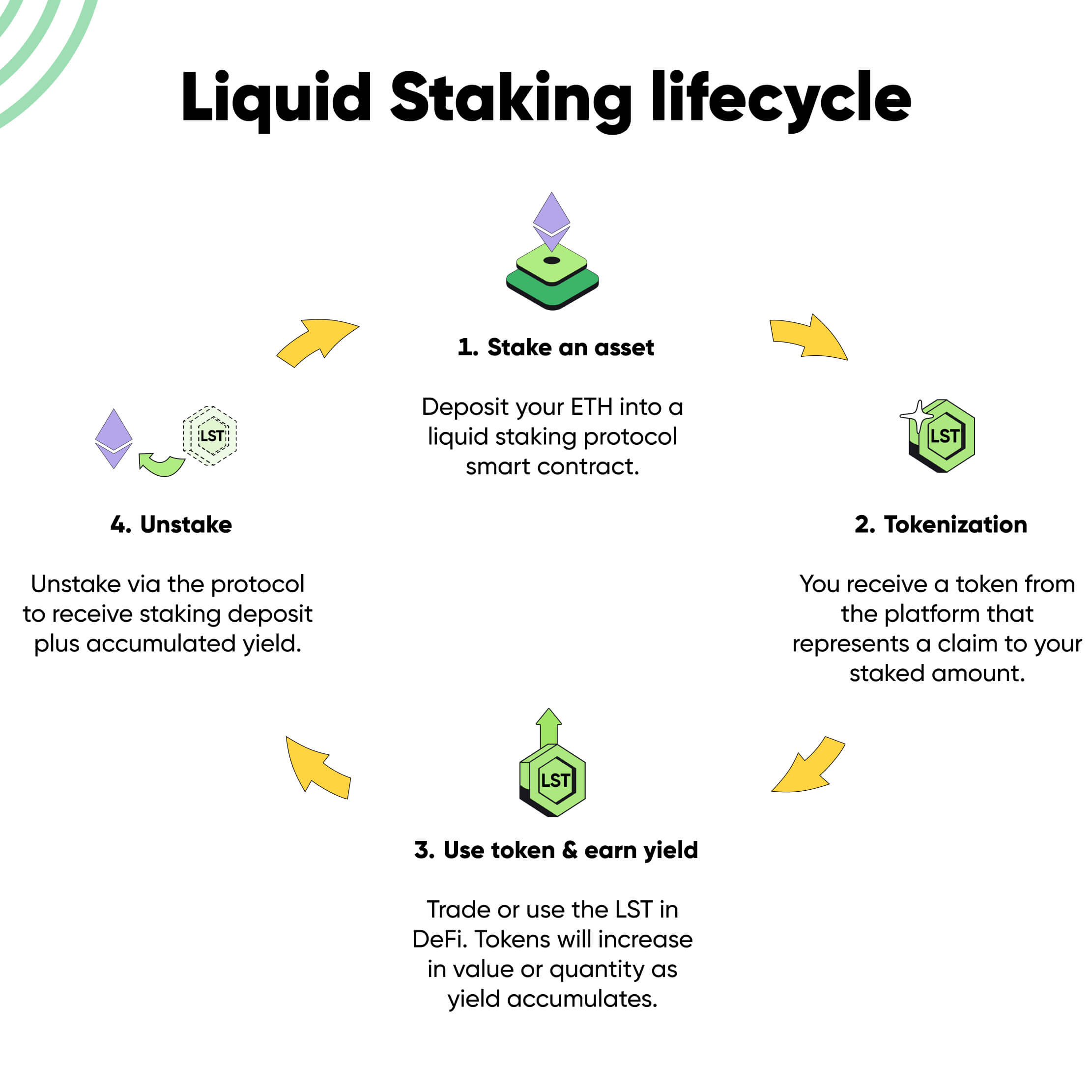
The primary benefit of liquid staking is the ability to trade or use your token in DeFi. Check the trading volume and depth of the liquid staking token (LST) on major exchanges. Thin liquidity can lead to high slippage when you try to sell, effectively eroding your gains. Look for LSTs with consistent daily volume across multiple DEXs and CEXs.
Security is paramount. Look for protocols that offer insurance funds or slashing protection. Some protocols hold reserve assets to cover potential losses from validator misbehavior. Additionally, check if the protocol has a transparent governance structure that allows token holders to vote on critical parameters like fee adjustments or validator additions.
| Protocol | Asset | Fee | Liquidity |
|---|---|---|---|
| Lido | ETH | 10% | High |
| Rocket Pool | ETH | 5% | Medium |
| Jito | SOL | 7% | High |
| Kujira | ATOM | 0% | Low |
Weak options and misleading claims
Liquid staking has grown into a multi-billion dollar sector, but not every protocol delivers on its promises. Many platforms advertise high yields while hiding the risks of smart contract exposure or depegging. Before committing capital, you need to separate marketing hype from actual protocol mechanics.
Overleveraged yield strategies
Some protocols boost staking returns by restaking the same assets across multiple layers or lending them out in money markets. This creates a fragile yield structure that collapses when market conditions shift. If the underlying asset drops in value, you face both staking penalties and liquidation risks. Look for protocols that prioritize capital preservation over aggressive leverage.
Hidden fee structures
Not all fees are transparent. Some platforms charge withdrawal fees that only appear when you try to exit, or they take a cut of the staking rewards before distributing them to you. Always check the total fee schedule, including governance token requirements and slippage costs. A protocol offering 5% APY with 1% hidden fees is less profitable than one offering 4% with no extra costs.
Depegging risks
Liquid staking tokens (LSTs) are supposed to maintain a 1:1 peg with their underlying asset, but this is not guaranteed. During market stress, LSTs can trade at a discount, causing you to lose value even if staking rewards remain steady. Check the historical stability of the token and the protocol’s insurance mechanisms. Avoid protocols with low total value locked (TVL), as they are more vulnerable to depegging events.
Centralization concerns
Many liquid staking protocols rely on a small group of validators or operators. This centralization creates single points of failure. If one operator is compromised or acts maliciously, the entire protocol could suffer. Look for protocols with decentralized validator sets and transparent governance models. The more distributed the network, the safer your investment.
No comments yet. Be the first to share your thoughts!