
Why liquid staking dominates 2026
Liquid staking has shifted from a niche DeFi experiment to a foundational infrastructure layer. In 2026, protocols like Lido and Rocket Pool are no longer alternative yield strategies; they are the default mechanism for securing proof-of-stake networks while maintaining capital efficiency. This transition marks the maturation of the asset class, moving it out of the speculative periphery and into the core of decentralized finance.
The market data reflects this structural change. The liquid staking market was valued at USD 168 million in 2024 and is projected to reach USD 572 million by 2032, growing at a compound annual growth rate (CAGR) of 16.9% Intel Market Research. This growth is not driven by fleeting hype cycles but by the operational necessity of unlocking staked capital for lending, trading, and liquidity provision.
For institutional players, the appeal lies in the dual benefit of network security and liquidity. By holding liquid staking tokens (LSTs), participants can earn staking rewards while simultaneously using the underlying assets as collateral. This efficiency solves the traditional liquidity trap of staking, where assets are locked for extended periods. As the ecosystem expands, the reliance on these protocols for yield generation and risk management continues to deepen, solidifying their role as critical financial primitives.
Top liquid staking protocols compared
The liquid staking landscape in 2026 is dominated by specialized infrastructure providers that cater to specific blockchain ecosystems. While Lido remains the market leader in total value locked, newer entrants like Jito and Rocket Pool have carved out distinct niches by optimizing for specific chain mechanics, such as Solana’s MEV distribution or Ethereum’s decentralized validator requirements.
Selecting a protocol requires evaluating three core variables: the underlying chain’s consensus mechanism, the distribution of validator nodes, and the specific yield composition. A direct comparison of the leading protocols reveals significant differences in risk profiles and capital efficiency.
| Protocol | Primary Chain | Key Feature | Approx. TVL | Risk Profile |
|---|---|---|---|---|
| Lido | Ethereum | Multi-chain leader, high liquidity | $20B+ | Centralized validator risk |
| Jito | Solana | MEV-Boosted staking engine | $1B+ | Solana network dependency |
| Rocket Pool | Ethereum | Decentralized node operators | $1B+ | Smart contract complexity |
| Marinade | Solana | Native Solana integration | $500M+ | Lower liquidity depth |
The table above highlights the divergence in market share. Lido’s dominance is driven by its deep liquidity pools and cross-chain presence, but this comes with concerns regarding validator centralization. In contrast, Rocket Pool emphasizes a decentralized node operator network, offering a different risk-return tradeoff for ethically minded investors.
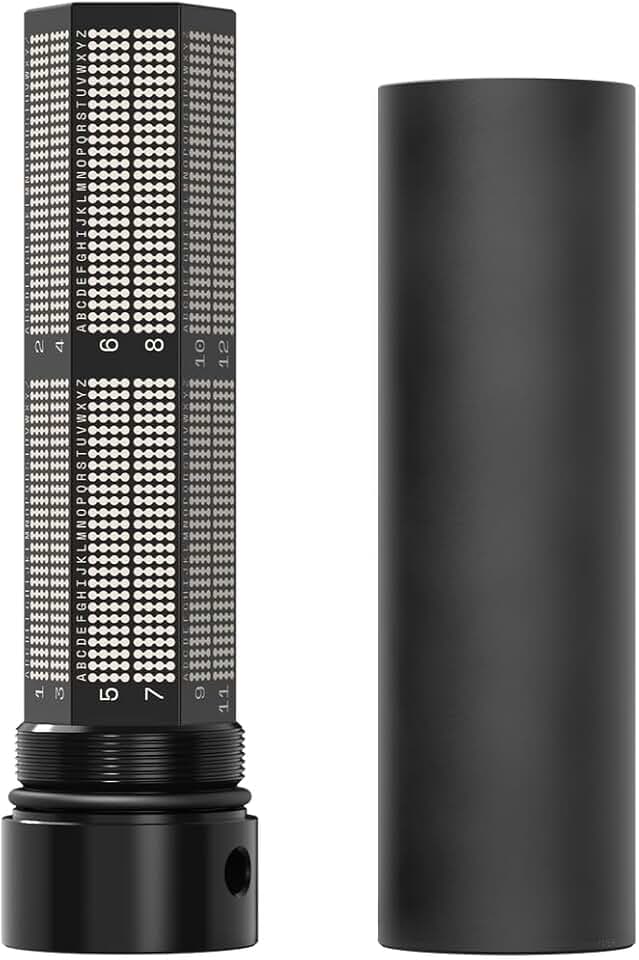
For those looking to acquire hardware to manage their own validator nodes or secure their private keys, the following tools are commonly used in the industry.


As an Amazon Associate, we may earn from qualifying purchases.
Understanding these mechanical differences is essential before allocating capital. The "best" protocol is not a universal constant but a function of which chain you trust and how you weigh decentralization against yield optimization.
Yield mechanics and real returns
Liquid staking yields are not a single number; they are the sum of three distinct revenue streams. Understanding how these layers stack is essential for assessing whether a protocol’s advertised APY is sustainable or merely a temporary subsidy. The base layer is the consensus reward, paid by the network for securing the chain. On Ethereum, this is the validator fee. On Solana, it is the block reward. This component is generally stable but low, often ranging between 3% and 5% depending on network inflation schedules.
The second layer is Maximal Extractable Value (MEV). Validators bundle transactions to extract tips, bribes, and arbitrage opportunities from the order flow. This is where significant yield variance occurs. Protocols that integrate sophisticated MEV-sharing frameworks, such as Flashbots or Jito, can add 1% to 3% to the base yield. However, MEV is volatile. It spikes during high network congestion and drops to near zero during quiet periods. Relying on MEV as a primary yield source introduces operational risk that pure staking does not carry.
The third layer is restaking yield. Protocols like EigenLayer allow staked assets to secure additional infrastructure services, paying extra rewards for this dual security role. This is the most controversial component of liquid staking returns. It increases nominal APY but concentrates risk. If the restaking protocol experiences a slashing event or exploit, the underlying staked assets are at risk. This layer transforms a passive yield product into an active risk exposure.
Nominal APY often misleads investors by ignoring inflation. If a protocol offers a 7% nominal yield but the token’s supply inflates by 10% annually, the real yield is negative. Always adjust for token inflation when comparing protocols. A 5% yield on a deflationary asset like ETH is more valuable than an 8% yield on a rapidly inflating altcoin. The table below compares the typical yield composition across major liquid staking protocols.
PriceWidget is not a direct yield metric, but tracking the token price against ETH or SOL helps gauge market sentiment. A declining price despite high yields often signals that investors are pricing in future inflation or risk. The live price of stETH and jitoSOL reflects the market’s current assessment of these combined factors.
Key risks and smart contract exposure
Liquid staking derivatives (LSDs) function as a bridge between proof-of-stake yields and DeFi liquidity, but that bridge introduces distinct layers of exposure. The primary mechanic—delegating stake to a validator while holding a tradable receipt—creates a dual dependency on both the underlying blockchain’s consensus rules and the protocol’s code integrity.
Slashing and validator performance
When you stake directly, you bear the full consequence of a validator’s misconduct. With liquid staking, you are one step removed, but the risk remains. If the protocol’s validator set incurs a slashing penalty for downtime or double-signing, the value of the liquid staking token drops proportionally. Unlike a simple loss of staking rewards, slashing can permanently reduce the principal amount backing your token.
De-pegging during market stress
The value of an LSD is theoretically anchored to the underlying asset (e.g., 1 stETH ≈ 1 ETH). However, this peg is not guaranteed by smart contract logic alone; it relies on market liquidity and arbitrage. During periods of extreme volatility or systemic fear, LSDs can trade at a significant discount to their underlying asset. This de-pegging risk is amplified if the protocol’s reserve mechanisms are insufficient to absorb sell pressure.
Smart contract vulnerability
Every layer of abstraction adds attack surface. Liquid staking protocols often involve complex interactions between staking contracts, governance tokens, and DeFi lending platforms. A vulnerability in any of these contracts—whether a reentrancy bug or an oracle manipulation—can lead to total loss of funds. The 2022 collapse of several major DeFi protocols highlighted how interconnected these systems are, making LSDs a high-stakes entry point into the broader financial stack.
Market outlook and technical trends
The liquid staking sector is expanding rapidly, with market valuations projected to grow from $168 million in 2024 to $572 million by 2032. This growth reflects a steady shift toward capital efficiency in decentralized finance, where staked assets remain usable across yield farming and lending protocols.
From a technical perspective, the performance of major liquid staking tokens like stETH closely mirrors the underlying asset. The following chart illustrates the stETH/ETH pair, highlighting how these instruments maintain peg integrity while accumulating yield over time.
Frequently asked: what to check next
what is the future of liquid staking?
The liquid staking market is expanding rapidly, with valuations projected to rise from USD 198 million in 2025 to USD 572 million by 2032, reflecting a 16.9% CAGR. This growth is driven by the protocol’s ability to enhance capital efficiency in decentralized finance. By allowing users to stake assets while retaining liquidity, liquid staking serves as a critical infrastructure layer for yield generation without locking up capital.
which liquid staking token shows the highest short-term returns?
Performance metrics shift hourly based on network activity and protocol incentives. As of recent data, Liquid Staked ETH leads with a 1-hour return of +9.78%, followed by Marinade staked SOL at +4.82% and Jitosol at +4.74%. These figures represent transient market conditions and should be monitored in real-time rather than treated as static yield expectations.
how does liquid staking differ from traditional staking?
Traditional staking requires locking assets for a fixed period, resulting in illiquid positions that cannot be traded or used as collateral. Liquid staking solves this by issuing a derivative token (e.g., stETH) that represents the staked asset and its accrued rewards. This derivative can be transferred, traded, or integrated into DeFi protocols, effectively unlocking the utility of otherwise dormant capital.
No comments yet. Be the first to share your thoughts!