
How liquid staking works in 2026
Liquid staking converts idle crypto assets into active capital. When you stake tokens like ETH or SOL, you lock them to secure the network and earn rewards. Liquid staking tokens (LSTs) solve the liquidity problem by issuing a receipt token representing your staked position. You hold the underlying yield while keeping the token free to use.
Protocols like Lido stake ETH and issue stETH. The protocol aggregates these funds to run validator nodes. As the network pays staking rewards, the value of the LST grows relative to the base asset.
This mechanism offers flexibility that traditional staking cannot. With standard staking, your capital is locked and inaccessible for weeks or months. With liquid staking, you can deploy the LST into other DeFi protocols—providing liquidity, using it as collateral for loans, or trading it on exchanges. You are no longer choosing between yield and liquidity; you are using both simultaneously.
Choose a primary staking asset
Your first decision determines the entire risk profile of your liquid staking strategy. You are not just picking a token; you are selecting the underlying blockchain that will secure your capital. The two dominant paths in 2026 are Ethereum and Solana, each offering distinct trade-offs between yield potential and network stability.
Ethereum: The Stability Benchmark
Ethereum remains the largest liquid staking ecosystem. Choosing Ethereum means prioritizing security and liquidity over maximum yield. The primary protocol here is Lido, which dominates the market by allowing users to stake ETH and receive stETH. This token can be used across other DeFi protocols while earning staking rewards, providing deep liquidity and integration options.
The yield on Ethereum is generally lower than on newer chains because the network prioritizes decentralization and robust security. However, the risk of protocol failure or slashing events is significantly lower compared to smaller networks. If your goal is to deploy capital with the highest degree of confidence in long-term survival, Ethereum is the baseline choice.
Solana: Higher Yield, Higher Complexity
Solana offers a different proposition. Networks like Solana often provide higher nominal yields to compensate for different risk factors and to incentivize participation. The leading liquid staking solution here is Jito, which integrates MEV (Maximal Extractable Value) boosting into the staking process. This means stakers can earn additional rewards from transaction ordering, potentially increasing overall returns.
However, Solana’s history of network outages introduces a layer of operational risk. While the technology has improved, the potential for downtime affects staking continuity. Solana is suitable for investors who can tolerate higher volatility and are comfortable with the technical nuances of MEV-boosted staking engines.
Matching Asset to Risk Tolerance
There is no universally "best" asset; the right choice depends on your specific yield goals and risk tolerance. If you seek a passive, low-maintenance allocation with deep liquidity, Ethereum’s established ecosystem is the safer harbor. If you are willing to navigate higher complexity for potentially higher returns, Solana’s MEV-integrated protocols offer a compelling alternative.
Consider your tolerance for network risk. Ethereum’s yield is derived primarily from consensus rewards. Solana’s yield includes consensus rewards plus MEV rewards, which can fluctuate based on network activity. Ensure you understand the source of the yield before committing capital.
Compare top LST protocols
Choosing the right liquid staking provider requires weighing yield potential against security and decentralization. The market is dominated by a few major players, each serving slightly different needs. Lido holds the largest share of total value locked, while Rocket Pool focuses on decentralization and Jito offers yield enhancements for Solana stakers.
| Protocol | Primary Chain | Est. APY | TVL (Approx.) | Validator Set |
|---|---|---|---|---|
| Lido | Ethereum | 3.0-3.5% | $25B+ | High (300+ validators) |
| Rocket Pool | Ethereum | 2.8-3.3% | $3B+ | Very High (Decentralized Node Operators) |
| Jito | Solana | 7.0-8.5% | $2B+ | Medium (Jito Labs + MEV) |
Lido is the established leader for Ethereum stakers, offering deep liquidity and broad integration across DeFi protocols. Its size provides stability, but it relies on a consortium of large validators. Rocket Pool is often preferred by those prioritizing censorship resistance and a truly decentralized network of node operators, though its slightly lower APY reflects the cost of maintaining that independence.
For Solana exposure, Jito has emerged as a top choice by bundling staking rewards with MEV (Maximal Extractable Value) profits. This structure can result in higher yields than standard staking, but it introduces different risk factors related to MEV distribution and validator selection. Always verify current APYs and TVL figures on the official protocol dashboards before committing capital, as these numbers fluctuate daily.
Execute the staking transaction
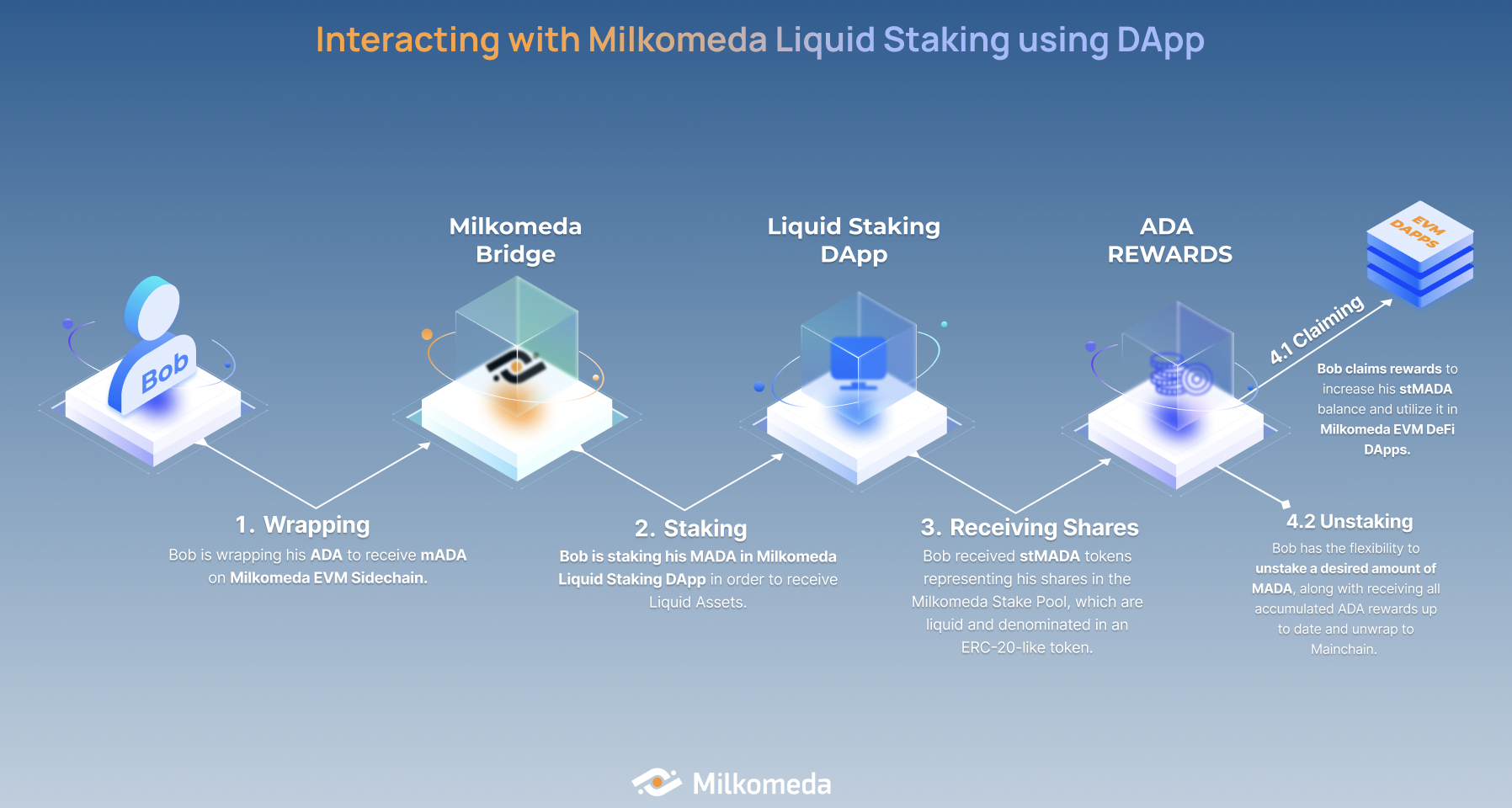
Deploying capital into liquid staking requires precision. You are converting your native assets into Liquid Staking Tokens (LSTs), which represent your staked balance and allow you to remain active in DeFi. This process is not a trade; it is a smart contract interaction that locks your assets and mints a receipt token.
1. Connect and Approve
Begin by connecting your wallet to the chosen protocol’s interface. Before any assets move, the protocol must approve the transfer of your native token (e.g., ETH or SOL) to its staking contract. This approval step is standard for all DeFi interactions. Ensure you are on the official website to avoid phishing sites that mimic legitimate interfaces.
2. Select Amount and Network
Enter the exact amount of native tokens you wish to stake. Most protocols allow you to stake the full balance or a custom amount. Verify the network fees (gas) displayed; high network congestion can delay the transaction or increase costs. Confirm that the selected network matches the one supported by your wallet and the protocol.
3. Confirm and Wait
Review the transaction details in your wallet pop-up. The contract will lock your native tokens and mint LSTs to your address. This process is instant on most Layer 1 and Layer 2 networks. Once confirmed, check your wallet’s "Tokens" tab. You should see the new LST balance appear. If it does not show up immediately, you may need to manually add the token contract address to your wallet view.
4. Verify Receipt
Navigate to the protocol’s dashboard or a block explorer to verify the transaction. Your LST balance should reflect the staked amount minus any initial fees. This verification ensures the transaction was successful and your capital is now secured in the staking contract. You can now use these LSTs in other DeFi applications while earning staking rewards.
Manage Impermanent Loss and Slashing Risk
Liquid staking tokens (LSTs) introduce two specific risks that do not exist with native staking: de-pegging and validator slashing. While native staking locks your capital, LSTs trade a tokenized version of that stake. This introduces counterparty risk and market volatility that you must actively manage.
Mitigate De-Pegging Exposure
De-pegging occurs when the LST trades below its underlying asset value. This typically happens during periods of extreme market stress or when a protocol faces solvency concerns. For example, Lido’s stETH has occasionally traded at a discount to ETH during broader DeFi liquidity crunches. To protect your capital, monitor the LST-to-ETH price ratio. If the discount widens beyond historical norms (typically >1-2%), consider unstaking or moving capital to a more liquid, stable LST.
Always verify you are interacting with official contract addresses. Phishing sites often mimic popular LST interfaces to drain wallets. Bookmark the official protocol pages and never click links from social media DMs or unverified notifications.
Shield Against Validator Slashing
Slashing occurs when a validator node violates protocol rules, resulting in the penalty of staked ETH. While individual validator penalties are usually small (0.01-0.1% of stake), they can compound across large pools. Major protocols like Lido and Rocket Pool distribute slashing losses across all stakers, but the risk is never zero.
To mitigate this, diversify your exposure across multiple LST providers. Do not allocate more than 20-30% of your staking capital to a single protocol. This ensures that a technical failure or slashing event at one provider does not critically impair your overall yield strategy. Additionally, prefer protocols with robust insurance funds or insurance mechanisms, such as Lido’s DAO treasury or third-party insurance products like Nexus Mutual.
Pre-commit security checklist
Before deploying capital into liquid staking, verify the following security and optimization steps. Treat this list as a final gate; skipping any item increases the risk of smart contract exploits or impermanent loss.

1. Verify the protocol's audit history
Do not trust unverified code. Check if the protocol has undergone multiple audits from reputable firms like Trail of Bits or OpenZeppelin. Look for a "bug bounty" program on Immunefi, which incentivizes white-hat hackers to find vulnerabilities before malicious actors do.
2. Check the total value locked (TVL)
Higher TVL generally indicates greater network security and liquidity. For Ethereum liquid staking, Lido remains the largest provider by a significant margin, offering a baseline of stability. Avoid protocols with low TVL, as they are more susceptible to manipulation and slippage during market volatility.
3. Confirm slashing protection
Staking involves the risk of "slashing," where validators lose stake for misbehavior. Ensure the protocol has a clear slashing protection fund or insurance mechanism. If the protocol does not explicitly state how it handles validator slashing, assume you bear the full risk.
4. Review the tokenomics and unlock schedule
Examine the vesting schedule for team and investor tokens. A large upcoming unlock can dilute your holdings and depress the price of the governance token. Ensure the liquid staking token (LST) does not suffer from severe depegging risks due to excessive supply.
5. Test with a small amount first
Never deploy your entire capital at once. Send a small test transaction to verify that the withdrawal process works as expected. This confirms that you can exit the position quickly if the market turns or if you identify a flaw in the protocol's interface.
6. Secure your wallet and keys
Use a hardware wallet for storing your LSTs. Never share your private keys or seed phrase. If you are using a browser extension wallet, ensure it is the official version from the developer's website to avoid phishing scams.
7. Monitor the protocol's governance
Participate in or at least monitor the protocol's governance discussions. Major changes to the staking parameters or fee structures are often voted on by LTH holders. Being informed allows you to react quickly to changes that might affect your yield.
8. Understand the tax implications
Staking rewards are often considered taxable income in many jurisdictions. Consult a tax professional to understand how your liquid staking rewards and subsequent sales will be taxed. Keeping accurate records of your transactions is essential for compliance.
9. Diversify across multiple protocols
Do not put all your assets into a single liquid staking protocol. Diversifying across two or three reputable providers reduces your exposure to a single point of failure. This strategy mitigates the risk of a catastrophic smart contract bug affecting your entire portfolio.
10. Keep an eye on network upgrades
Major network upgrades, such as Ethereum's Dencun or Pectra upgrades, can significantly impact staking yields and mechanics. Stay informed about upcoming changes and adjust your strategy accordingly to avoid unexpected losses or missed opportunities.
Frequently asked questions about LSTs
Work through Liquid Staking
No comments yet. Be the first to share your thoughts!