

Get liquid staking 2026 right
Before you deposit assets, you need a clear checklist of prerequisites. Liquid staking is not passive income without oversight; it is a multi-layered financial instrument that requires active management. If you skip the setup phase, you risk exposing your capital to smart contract vulnerabilities or unintended leverage.
Start by selecting a protocol that matches your risk tolerance. Established platforms like Lido and Rocket Pool offer liquidity through receipt tokens, allowing you to earn staking rewards while deploying those tokens elsewhere in DeFi. However, this convenience comes with trade-offs. You must understand the validator distribution, the fee structure, and the specific risks of the underlying network.
Next, secure your wallet and verify the contract addresses. Never interact with a link from an unsolicited message. Always cross-reference the official documentation with the on-chain contract. A single typo or phishing site can drain your entire position. Treat your private keys with the same seriousness as physical cash.
Finally, plan your exit strategy. Liquid staking tokens can fluctuate in value relative to the underlying asset due to market dynamics and protocol fees. Know when you will rebalance or unstake. Liquidity is an advantage, but only if you use it intentionally rather than reactively.
Work through the steps
Liquid Staking works best as a clear sequence: define the constraint, compare the realistic options, test the tradeoff, and choose the path with the fewest hidden costs. That order keeps the advice usable instead of decorative. After each step, pause long enough to check whether the recommendation still fits the reader's actual situation. If it depends on perfect timing, unusual access, or a best-case budget, include a simpler fallback.
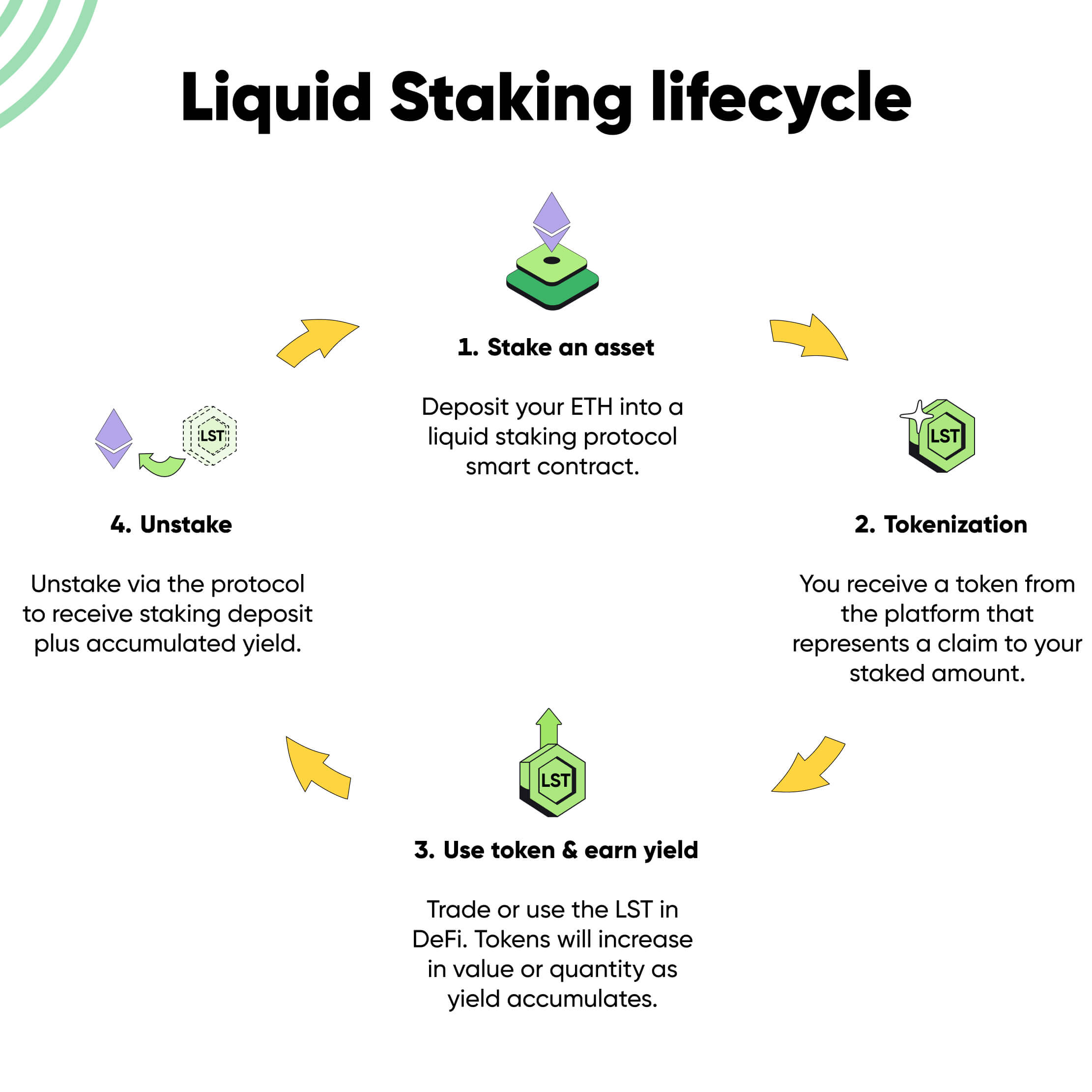

Common liquid staking mistakes to avoid
Even with liquid staking, small errors in setup or protocol selection can erase yield or expose capital to unnecessary risk. Many users focus only on the nominal APY and ignore the underlying mechanics. This section outlines the most frequent pitfalls and how to sidestep them.
Chasing the highest APY without checking the source
A 20% APY looks attractive, but it often reflects high volatility or unstable reward distribution rather than sustainable yield. Liquid staking tokens (LSTs) derive value from two sources: the base staking reward and the secondary market premium. If the premium is negative or shrinking, the total return drops even if the base reward stays high. Always verify that the protocol’s rewards come from legitimate consensus participation, not just token emissions that dilute holders.
Ignoring smart contract risk and centralization
Not all liquid staking protocols are created equal. Some rely on a small set of validators, creating a centralization risk that can lead to slashing events or governance attacks. Others use more decentralized validator networks but may have less audited code. Check the protocol’s audit history, the number of independent validators, and the governance structure. A protocol with a large TVL (Total Value Locked) is not automatically safer if the underlying smart contracts have known vulnerabilities.
Overlooking liquidity and exit risks
Liquid staking is supposed to provide liquidity, but some LSTs trade at a significant discount to their underlying asset during market stress. If you need to exit quickly, slippage can eat into your profits. Before committing capital, check the trading volume and depth on major exchanges. Ensure there is a reliable way to convert your LST back to the base asset or stablecoin without massive price impact.
Neglecting tax implications
Staking rewards are often treated as taxable income in many jurisdictions, even if you haven’t sold the tokens. When you later sell the LST or the underlying asset, you may face capital gains tax on the appreciation. Keep detailed records of when you staked, when rewards were distributed, and the fair market value at those times. Consult a tax professional familiar with crypto to avoid surprises during tax season.
Liquid staking 2026: what to check next
Before committing capital, it helps to separate the marketing hype from the actual mechanics of liquid staking. The landscape in 2026 is defined by higher yields but also more complex risk vectors. Here are the practical answers to the most common questions.
Helpful gear
Use these product recommendations as a starting point, then choose the size, material, and price point that fit how you actually use the gear.

As an Amazon Associate, we may earn from qualifying purchases.
No comments yet. Be the first to share your thoughts!