
Get liquid staking right
Before you deposit, treat the setup like a security audit rather than a simple savings account. Liquid staking tokens (LSTs) give you staking rewards while keeping your capital usable as collateral, but they introduce smart contract and slashing risks that require careful management 1. Skipping the prerequisites often leads to locked assets or unexpected yield losses.
1. Choose a reputable protocol
Start by selecting a protocol with a long track record and deep liquidity. Lido is the largest Ethereum LST provider, offering the most reliable exit liquidity for your tokens 2. For smaller ecosystems, look for protocols with transparent governance and audited code. Avoid new, unaudited platforms that promise unusually high yields.
2. Verify your wallet compatibility
Ensure your wallet supports ERC-20 tokens if you are staking on Ethereum. Some hardware wallets require specific firmware updates to recognize LSTs. If you plan to use your staked assets in DeFi lending or borrowing, check that your target protocols accept the specific LST you are minting.
3. Understand the unstaking period
Not all liquid staking is instant. Ethereum’s standard withdrawal queue can take days or weeks during high demand. Check the current withdrawal time for your chosen protocol. If you need immediate liquidity, consider protocols with secondary markets or insurance pools that allow you to sell your LST at a slight discount.
4. Monitor slashing risks
Slashing occurs when validators misbehave, resulting in lost staked funds. Reputable protocols diversify their validator set to mitigate this risk. Read the protocol’s documentation on how they handle slashing events and whether they offer insurance mechanisms. Never stake with a single validator node unless you fully trust the operator.
How to Set Up Liquid Staking Safely
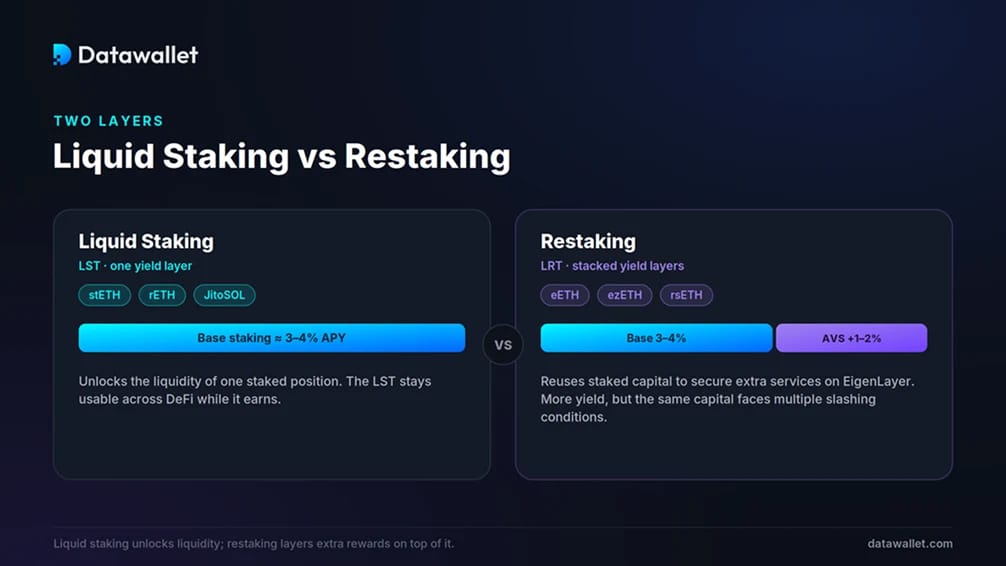
Liquid staking lets you earn staking rewards while keeping your tokens usable in DeFi protocols. Unlike traditional staking, which locks assets, liquid staking issues a receipt token you can lend, trade, or use as collateral.
Follow these steps to set up a secure liquid staking position. The process involves choosing a protocol, connecting your wallet, staking your assets, and verifying the receipt token in your wallet.
Start by selecting a protocol with deep liquidity and strong security. Lido is the leading Ethereum liquid staking protocol, offering best-in-class security and competitive rewards. Look for protocols that have undergone third-party audits and have a transparent governance model. Avoid new or untested protocols with low total value locked (TVL).

Connect your Web3 wallet, such as MetaMask or Ledger, to the protocol’s official website. Always verify the URL to avoid phishing sites. Never share your private keys or seed phrase. If using a hardware wallet, ensure your device firmware is up to date. Double-check the contract address before approving any transactions.
Deposit the cryptocurrency you want to stake, such as ETH or SOL, into the protocol. The amount you deposit determines how many liquid staking tokens (LSTs) you receive. Be aware of network gas fees, which can be high during peak times. Consider using a Layer 2 solution if available to reduce costs.
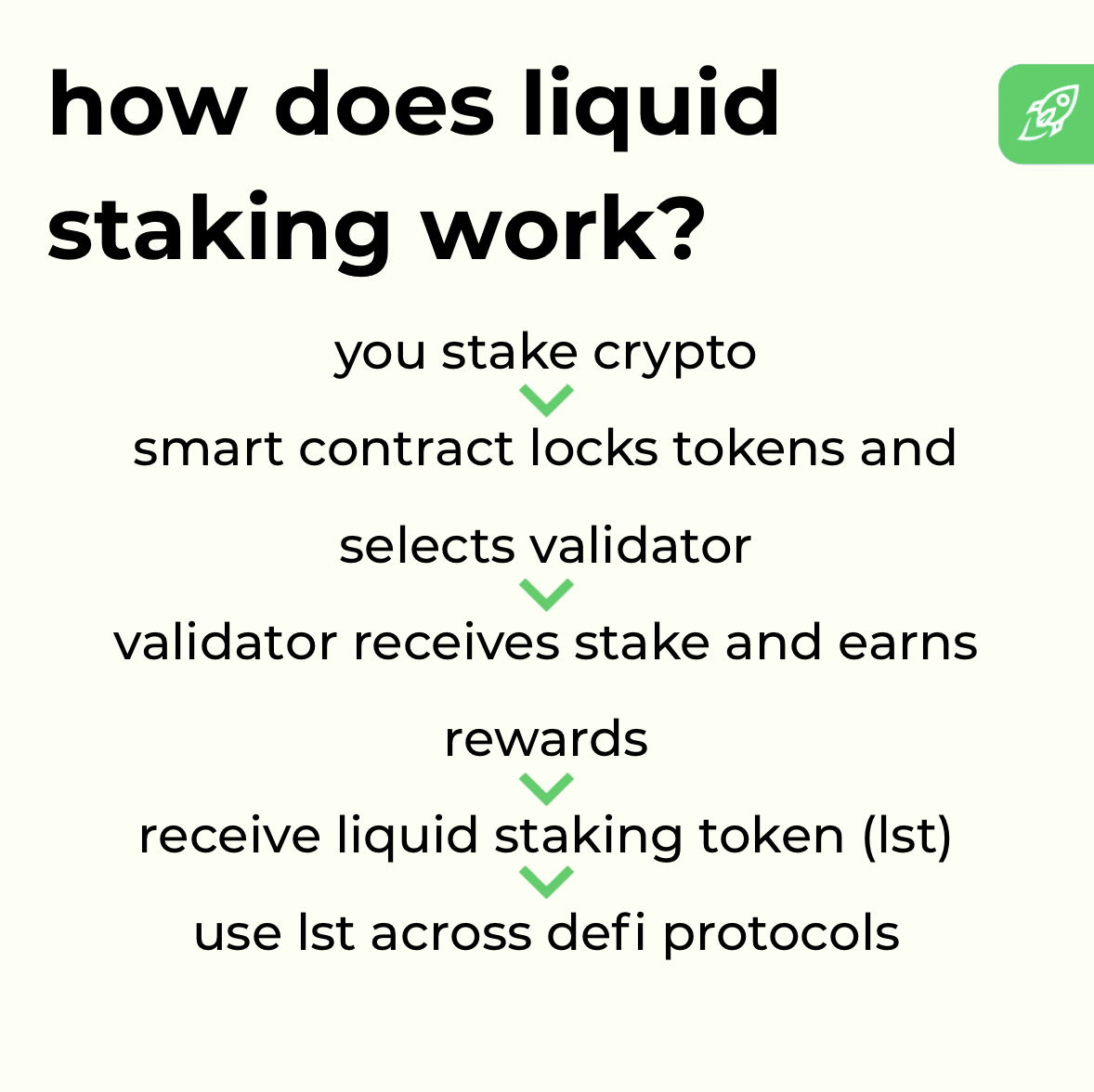
After the transaction is confirmed, check your wallet for the received LSTs. These tokens represent your staked assets plus accrued rewards. You can now use these LSTs in DeFi protocols for lending, borrowing, or providing liquidity. Ensure the LSTs appear correctly in your wallet interface.

Regularly check your staking rewards and the health of the protocol. Track the exchange rate between your LSTs and the underlying asset, as this reflects staking yield. Be aware of risks like smart contract vulnerabilities, slashing events, and impermanent loss if you use LSTs in liquidity pools.
Fix common mistakes in liquid staking
Liquid staking offers yield, but the margin for error is thin. Most losses come from operational slips, not protocol failures. You can avoid these pitfalls by treating your setup like a production environment rather than a casual experiment.
Ignoring smart contract risk is the first trap. You are trusting third-party validators and the underlying protocol code. If the protocol is exploited or the staking operator goes offline, your staked assets may suffer slashing or loss. Always check the protocol’s audit history and insurance coverage before depositing. Do not assume that "decentralized" means "risk-free."
Overlooking the rebasing mechanism causes confusion and tax headaches. Some liquid staking tokens (LSTs) are rebasing, meaning your token balance changes automatically with rewards, while others are non-rebasing, requiring you to claim rewards manually. If you use a rebasing token in a DeFi position, the changing balance can trigger unintended liquidations or position closures. Verify the token type before integrating it into automated strategies.
Miscalculating the depeg risk can wipe out gains. The value of your liquid staking token should track the underlying asset (e.g., ETH), but it can deviate during market stress. If you use the LST as collateral for a loan and the price drops below the liquidation threshold, you will lose your collateral. Always maintain a healthy loan-to-value ratio and monitor the LST’s peg against the native asset in real-time.
Neglecting gas fees erodes small yields. If you are staking small amounts, the cost of depositing, swapping, and withdrawing may exceed your annual percentage yield (APY). Calculate the break-even point: how much yield do you need to cover the gas costs of entering and exiting the position? For small portfolios, holding the native asset directly may be more efficient than liquid staking.
Liquid staking: what to check next
Before committing capital, it helps to separate the mechanics from the marketing. Liquid staking offers flexibility that traditional staking cannot, but it introduces specific smart contract and market risks you need to understand.
No comments yet. Be the first to share your thoughts!