
Choose a liquid staking protocol
Selecting a liquid staking protocol requires balancing security, liquidity depth, and fee structures. While brand recognition often drives initial interest, technical due diligence ensures your assets remain safe and yield-generating. The goal is to find a protocol that offers the best combination of decentralization and operational efficiency.
The following comparison highlights key metrics for major liquid staking tokens. These values fluctuate based on network conditions, so verify current rates on official protocol dashboards before committing capital.
| Protocol | Native Asset | Fee Structure | Decentralization Model |
|---|---|---|---|
| Lido | Ethereum | 10% staking yield fee | Node operators (centralized validation) |
| Rocket Pool | Ethereum | Variable node operator fee | Community-run nodes |
| Frax Ether | Ethereum | Variable fee | Hybrid oracle/node model |
| StakeStone | Multi-chain | Variable fee | Multi-chain validator set |
Lido remains the market leader in terms of liquidity depth, making it easier to exit positions without significant slippage. However, its reliance on a smaller set of node operators raises centralization concerns for some users. Rocket Pool offers a more decentralized alternative, allowing anyone to run a node, though this may result in slightly lower liquidity in certain markets.
When evaluating these options, consider the fee structure carefully. Some protocols charge a flat percentage of staking rewards, while others adjust fees based on network congestion or node performance. Lower fees do not always mean better returns if the protocol lacks sufficient liquidity or security audits.
Connect wallet and deposit assets
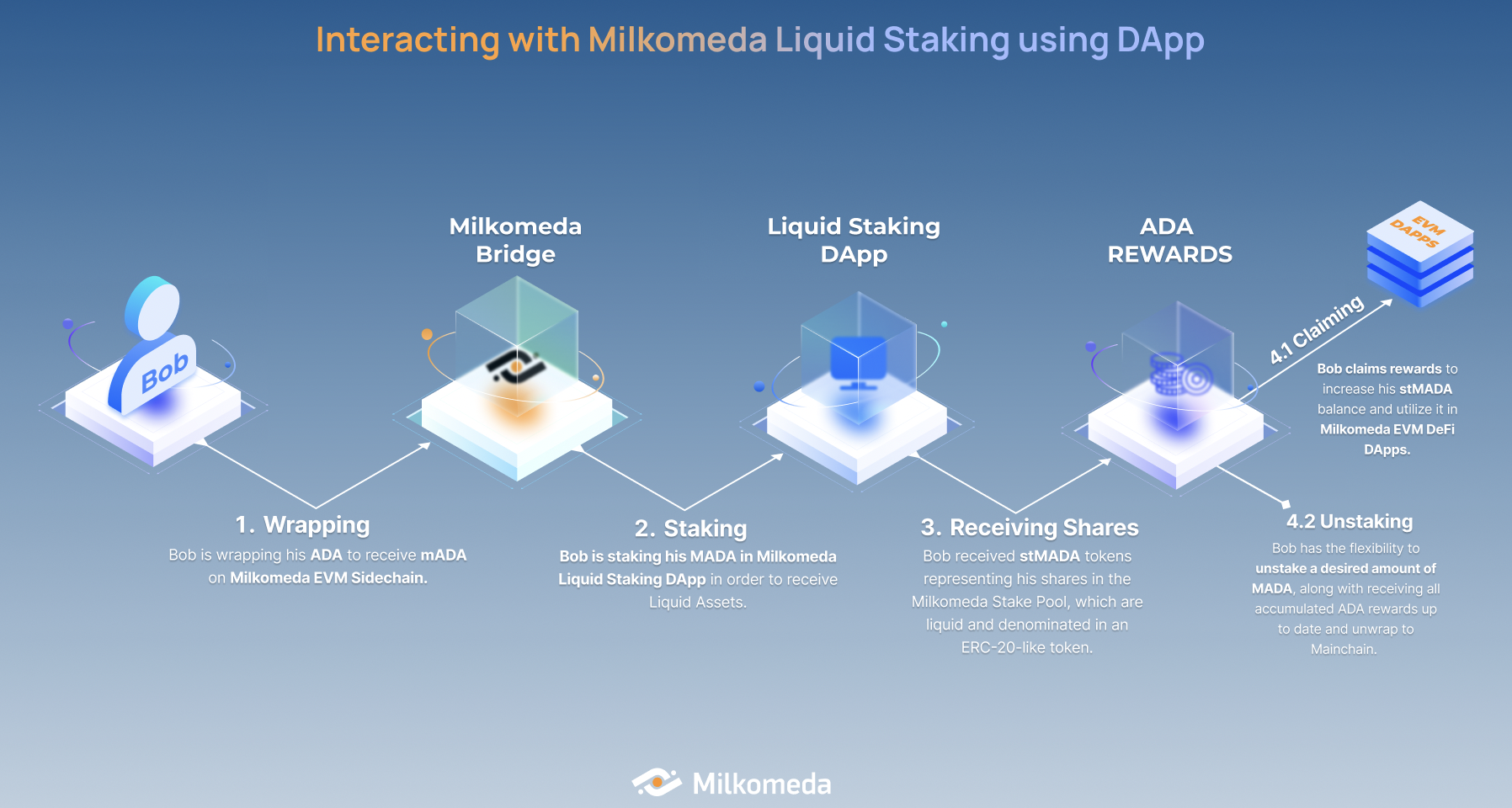
To begin using liquid staking for yield and liquidity, you first need to bridge your assets into a liquid staking protocol. This process involves connecting your non-custodial wallet, verifying the smart contract, and depositing your chosen cryptocurrency. Because liquid staking locks your funds to secure the network while issuing a derivative token, precision in the initial deposit is critical to avoid losing access to your capital.
Navigate to the official website of your chosen liquid staking provider, such as Lido or Rocket Pool. Click "Connect Wallet" and select your preferred provider (e.g., MetaMask, Ledger Live). Ensure you are on the official domain to prevent phishing attacks. Once connected, the interface will display your available balance of supported assets like ETH or SOL.

Before interacting, check the contract address against the protocol’s official documentation or GitHub repository. This step is non-negotiable for security. If the address displayed in your wallet interface does not match the official source, disconnect immediately. This verification ensures you are interacting with the legitimate staking pool and not a malicious imitation designed to drain your funds.
If you are depositing an ERC-20 token, your wallet will request a "Set Approval" transaction. This grants the smart contract permission to move your tokens from your wallet to the staking pool. Review the gas fee and the approval limit; using a "Unlimited Approval" can be risky if the protocol is compromised, so consider capping it to the amount you intend to stake.
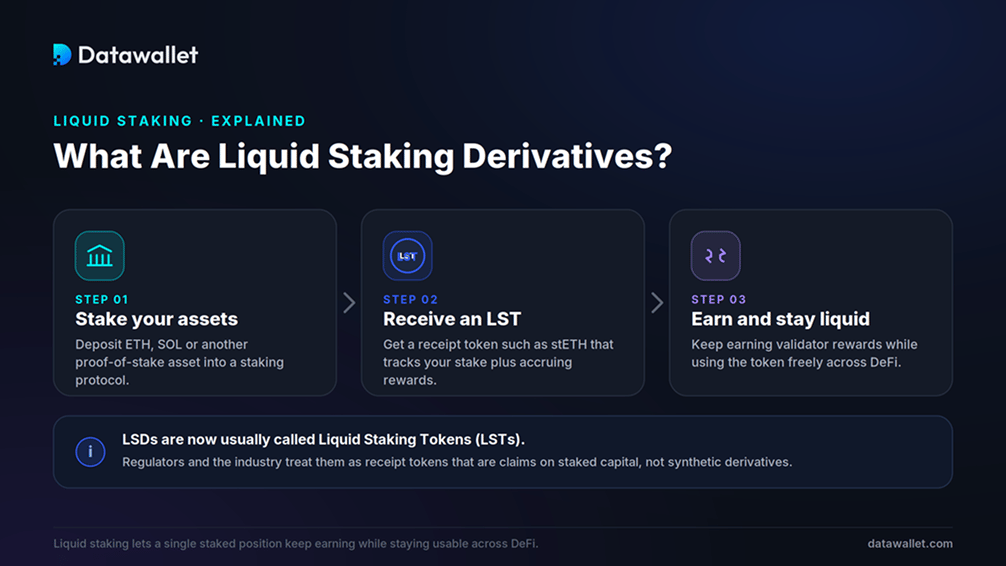
Enter the amount of crypto you wish to stake and confirm the transaction. Once the blockchain confirms the deposit, the protocol will mint and send liquid staking tokens (LSTs) to your wallet. These LSTs (e.g., stETH, rETH) represent your staked position and accrue rewards automatically. You can now use these LSTs in other DeFi protocols for additional yield while your underlying asset continues to secure the network.
This sequence transforms your idle assets into productive capital. By following these steps carefully, you maintain liquidity while earning staking rewards, a core benefit of liquid staking over traditional methods.
Deploy liquid tokens in DeFi strategies
Once your staked assets are converted into liquid staking tokens (LSTs), you can compound yields by using them as collateral in decentralized finance protocols. This approach allows you to earn staking rewards while simultaneously generating additional income through lending or liquidity provision.
The following steps outline how to deploy these tokens effectively.
Transfer your liquid staking tokens to a reputable lending protocol, such as Aave or Morpho. By depositing these assets as collateral, you can borrow stablecoins against them without selling your underlying staked position. This provides immediate liquidity while preserving your exposure to ETH staking rewards.
Use your LSTs to provide liquidity in automated market maker (AMM) pools, such as those on Curve or Uniswap. LST/ETH pools are particularly popular because they track the same underlying asset, reducing impermanent loss risk compared to volatile pairs. Liquidity providers earn trading fees and often receive additional protocol incentives.
Regularly check your position’s health factor to ensure you remain well-collateralized. If the value of your borrowed assets rises relative to your collateral, or if staking rewards fluctuate, you may need to deposit more LSTs or repay debt to avoid liquidation. Rebalancing helps maintain yield efficiency and reduces risk.
Liquid staking protocols tend to incentivize these pools to have more liquidity so you can get very good risk-adjusted yield. However, this strategy introduces smart contract risk and market volatility. Always use official, audited platforms and start with small amounts to understand the mechanics before scaling up.
Monitor impermanent loss and slashing risk
When you supply liquid staking tokens (LSTs) to a liquidity pool, you are no longer just holding an asset; you are actively managing two distinct financial risks. The first is impermanent loss, which occurs when the price of your LST diverges from the underlying asset or the paired token in the pool. The second is protocol-specific slashing, where a validator node is penalized for downtime or malicious behavior, potentially reducing the total value of the staked pool.
Tracking Depegging and Impermanent Loss
Impermanent loss becomes permanent when you withdraw from a pool while the tokens are out of balance. With LSTs, this risk is amplified if the protocol’s token begins to trade at a discount to its underlying ETH value—a scenario known as depegging. Lido, for example, is the leading liquid staking token by liquidity, but its price can fluctuate based on network conditions and market sentiment.
You should monitor the LST-to-ETH ratio daily. If the ratio drops significantly below 1:1, your effective yield may be eroded by the depeg, even if you are earning staking rewards. Most major DeFi dashboards allow you to set alerts for these price deviations so you can rebalance or exit before the loss compounds.
Understanding Slashing Exposure
Slashing is a penalty enforced by the consensus layer when validators fail to perform their duties. If you are providing liquidity to a pool backed by a single staking protocol, you are indirectly exposed to that protocol’s validator performance. A major slashing event can reduce the total supply of LSTs or their backing value, causing a sharp drop in the token’s price.
To mitigate this, check the protocol’s historical slashing records and validator diversity. Some protocols distribute stakes across hundreds of validators, reducing the impact of any single failure. Always read the protocol’s documentation on slashing protection mechanisms before allocating capital.
How to withdraw or rebalance liquid staking positions
Exiting a liquid staking position requires understanding two different paths depending on your end goal. You can either unstake directly with the protocol to recover the underlying asset, or you can sell the liquid token on a decentralized exchange (DEX) for immediate liquidity. Choosing the right path depends on whether you need the native asset for long-term holding or simply want to free up capital.
Unstaking through the protocol
To retrieve your original assets, you must initiate an unstake request through the liquid staking protocol. This process triggers a withdrawal queue, which is a waiting period required by the underlying blockchain to manage validator exits. During this time, you still hold the liquid token, but it cannot be used for trading or lending. The duration varies by network; Ethereum-based protocols often have queues lasting several days, while other chains may process exits in hours. Check the protocol’s dashboard for current queue lengths before initiating this step.
Selling liquid tokens on a DEX
If you need immediate access to funds without waiting for the unstake queue, selling your liquid token on a decentralized exchange is the faster alternative. This method bypasses the withdrawal queue entirely by transferring your token to a buyer who wants exposure to staking yields. While this provides instant liquidity, you may face slippage if trading large volumes in less liquid pools. Always compare the exchange rate against the underlying asset’s value to ensure you are receiving fair market value.
Rebalancing your portfolio
Rebalancing allows you to shift exposure between different liquid staking tokens or move capital into other DeFi opportunities. Since liquid tokens are ERC-20 compatible (or equivalent on other chains), you can swap them directly in your wallet or via a DEX interface. This is particularly useful if you want to move from one protocol to another with better yields or lower fees. Ensure you account for gas costs and potential tax implications when executing swaps.
Before taking action, verify the current status of your position. Log into the protocol interface to see if your assets are staked, in queue, or available for withdrawal. Check the estimated time for unstaking if you plan to retrieve the native asset. This step prevents unnecessary delays and helps you decide between unstaking or selling.
Choose your exit path. For native asset recovery, click "Unstake" or "Withdraw" on the protocol dashboard. For immediate liquidity, connect your wallet to a DEX like Uniswap or Curve and swap your liquid token for your desired asset. Confirm the transaction details, including gas fees and exchange rates, before signing.
After submitting your request, monitor the transaction status. If unstaking, track the queue progress until your native assets are deposited into your wallet. If selling, verify the receipt of the swapped tokens in your wallet. Update your personal records to reflect the new asset allocation and any realized gains or losses.
-
Verify current withdrawal queue length on the protocol dashboard
-
Ensure no active lending or liquidity positions are locked with the liquid token
-
Calculate gas costs to ensure they do not outweigh the value of the rebalance
-
Compare DEX exchange rates against the underlying asset value to minimize slippage
No comments yet. Be the first to share your thoughts!