
Choose the right liquid staking token
Selecting a liquid staking token (LST) requires looking past market capitalization. A large token size often signals centralization or regulatory risk, which can undermine the yield you are trying to secure. Instead, evaluate protocols based on three concrete metrics: the real yield after fees, the liquidity depth for exiting positions, and the decentralization of the validator set.
Start by comparing the top protocols side-by-side. The table below highlights the trade-offs between the largest providers. Lido dominates in liquidity but faces scrutiny over its validator concentration. Rocket Pool and Coinbase offer more decentralized alternatives, though their liquidity profiles differ significantly.
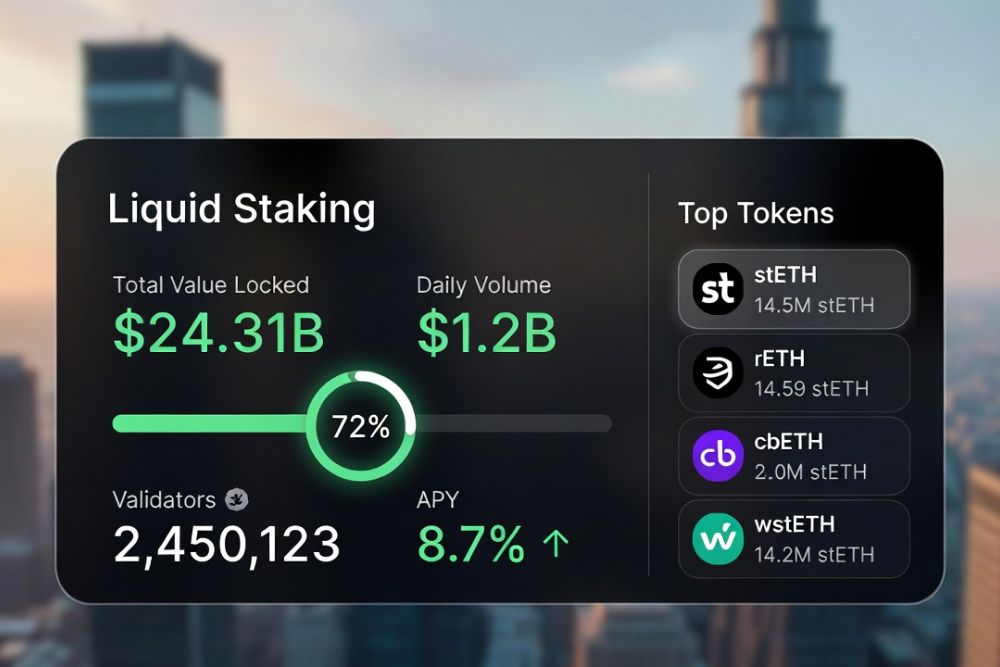
| Protocol | Est. Yield | TVL | Decentralization |
|---|---|---|---|
| Lido (stETH) | 3.2% | $28B | Medium |
| Rocket Pool (rETH) | 3.1% | $4.2B | High |
| Coinbase (cbETH) | 3.0% | $7.8B | Low |
| Binance (beth) | 3.3% | $2.1B | Low |
Liquidity is your exit strategy. If you need to move capital quickly during a market dip, you must ensure the token has sufficient depth on major exchanges and DeFi pools. stETH and cbETH typically offer the tightest spreads, while smaller LSTs may suffer from slippage. Always verify the withdrawal queue times and any associated fees before committing funds.
Finally, check the protocol’s security track record. Look for independent audits and the age of the smart contracts. Established protocols like Lido and Rocket Pool have survived multiple market cycles, providing a layer of proof that newer entrants lack. Prioritize longevity and transparency over marginal yield differences.
Deposit funds via a verified bridge or dApp
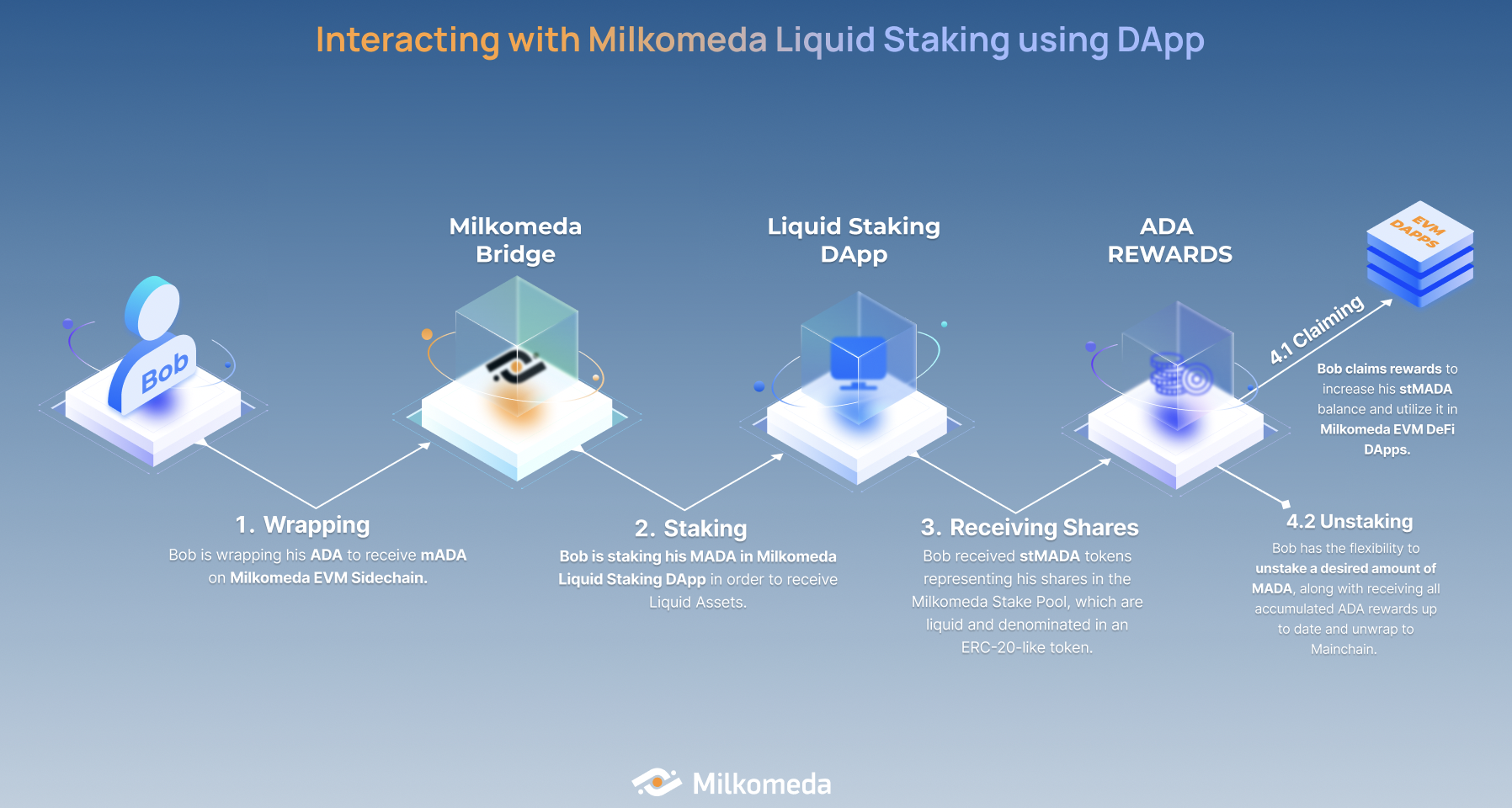
Depositing crypto for liquid staking is a multi-step process that moves your assets from a personal wallet to a staking protocol. Because this involves smart contracts and external bridges, verifying every interface is essential to prevent loss.
The workflow below outlines the standard sequence for depositing ETH and receiving liquid staking tokens (LSTs). Always confirm you are on the official protocol website before connecting your wallet.
Search for the official website of your chosen liquid staking protocol. Bookmark the URL to avoid phishing sites in the future. Do not click links from social media or email without verifying the source.
Open the dApp and click the "Connect Wallet" button. Approve the connection request in your wallet interface. Ensure you are using a hardware wallet or a secure software wallet for large deposits.
Choose the specific cryptocurrency you wish to stake, such as ETH or SOL. Verify that the token symbol and network match your holdings. Incorrect network selection can result in permanent loss of funds.

Input the amount of crypto you want to deposit into the liquid staking pool. Review any minimum deposit requirements or gas fees associated with the transaction. Double-check the amount before proceeding.
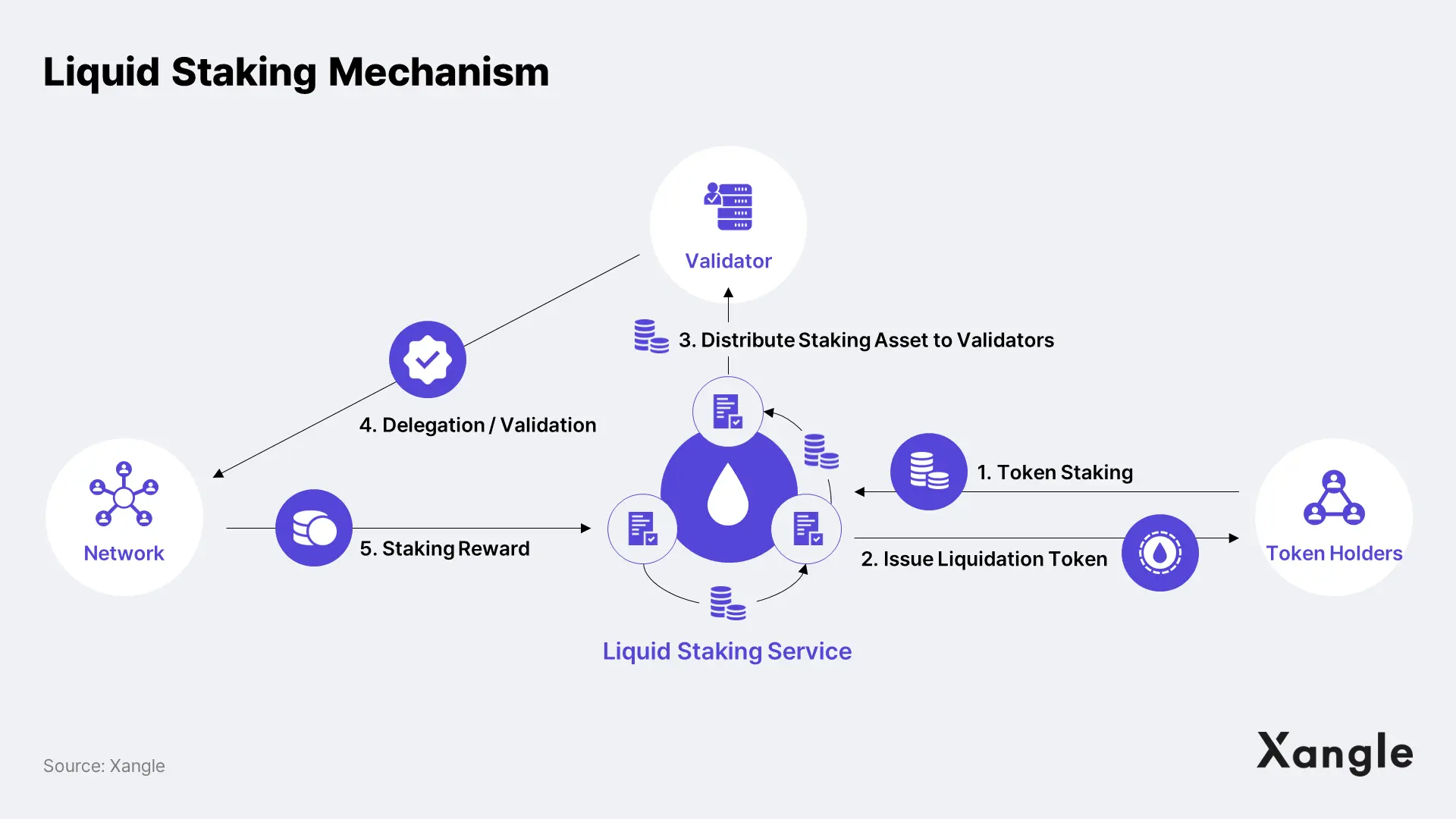
Review the transaction details in your wallet, including the gas fee and the expected return rate. Sign the transaction to broadcast it to the blockchain. Wait for the network confirmation to complete the deposit.
After the transaction confirms, your liquid staking tokens will appear in your wallet. These tokens represent your staked position and can be used in other DeFi applications while earning staking rewards.
Deploy LSTs into DeFi yield strategies
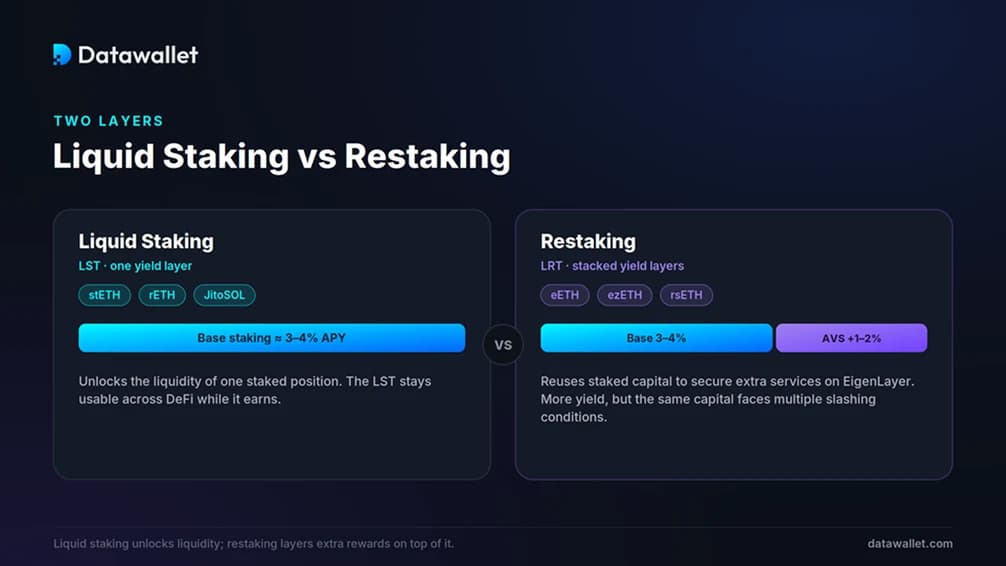
Your liquid staking token (LST) is not just a receipt; it is working capital. While the underlying asset earns staking rewards, your LST can generate additional yield through DeFi protocols. This process, often called "yield stacking," compounds returns by leveraging the token in lending markets or liquidity pools.
The goal is to capture the staking yield while simultaneously earning trading fees or lending interest. This turns a passive hold into an active income stream.
Lend your LSTs
Lending protocols allow you to supply your LST as collateral or as a direct asset to earn interest. When you deposit your LST, borrowers take it out, paying interest that goes back to you on top of your staking rewards.
- Connect your wallet to a reputable lending protocol.
- Select the specific LST you wish to deposit (e.g., cbETH, rETH, or stETH).
- Approve the transaction to allow the protocol to access your tokens.
- Deposit the assets to start earning yield immediately.
This strategy is low-risk if you use established platforms, but always check the protocol's audit status. The primary risk here is smart contract vulnerability, not market volatility, since you are not leveraging up with borrowed funds.
Provide liquidity in pools
For higher potential returns, you can provide liquidity to decentralized exchanges (DEXs). By pairing your LST with another asset, such as USDC or ETH, you earn a share of the trading fees.
- Stablecoin Pairs: Pairing your LST with a stablecoin reduces impermanent loss risk since the value ratio remains relatively stable.
- ETH Pairs: Pairing with ETH captures trading fees from ETH swaps but exposes you to impermanent loss if the price diverges significantly.
Before providing liquidity, calculate the expected annual percentage yield (APY) versus the potential loss from impermanent loss. Some protocols offer "managed" or "concentrated" liquidity options to mitigate these risks.
Monitor and rebalance
DeFi yields are dynamic. Staking rewards fluctuate with network activity, and lending rates change based on supply and demand. You must monitor your positions regularly.
- Check Protocol Health: Ensure the lending or DEX protocol remains solvent and active.
- Track Impermanent Loss: If providing liquidity, calculate if the fees earned outweigh the loss in asset value.
- Reinvest Yields: Many protocols auto-compound, but manual reinvestment can optimize returns during high-yield periods.
By actively managing these positions, you transform your liquid staking token from a simple store of value into a multi-layered yield engine. This approach maximizes the utility of your crypto assets in the 2026 DeFi landscape.
Monitor smart contract and slashing risks
Liquid staking introduces a layer of complexity that amplifies traditional crypto risks. You are no longer just trusting a validator; you are trusting the code that mints your receipt token and the logic that distributes rewards. When these systems fail, the losses are often total and irreversible.
Watch for slashing events
Slashing is a penalty imposed by proof-of-stake networks when validators misbehave, such as going offline or double-signing blocks. On liquid staking protocols, this penalty is distributed across all stakers. If a protocol’s validator set is slashed, your stETH or rETH balance drops instantly, and there is no insurance fund to cover the loss.
To mitigate this, check the protocol’s validator diversification. Protocols that stake through a single validator or a small, centralized pool carry significantly higher slashing risk. Look for protocols that distribute stake across multiple independent operators.
Audit smart contract vulnerabilities
The smart contracts governing liquid staking tokens are high-value targets for hackers. A single bug in the minting, redemption, or reward distribution logic can lead to a total drain of the protocol’s treasury. Because these contracts are immutable once deployed, a successful exploit often results in the token becoming worthless.
Before staking, verify that the protocol has undergone independent security audits from reputable firms. More importantly, check the audit report for any unresolved critical issues or bugs that were patched but not fully mitigated. Relying on a protocol without a transparent, public audit trail is a gamble with your principal.
Verify your position before rebalancing
Before you exit or rebalance your liquid staking position, treat the transaction like a pre-flight check. A single misconfigured parameter can lead to slippage, unexpected tax events, or loss of yield during the transition. This verification sequence ensures your assets are secure and your expectations match the market reality.
Check the health of the underlying validator or protocol. If the validator is slashed or experiencing downtime, your liquid staking token (LST) may trade at a discount or lose value independently of the base asset. Use official explorer data to verify the validator's current status before initiating any move.

Liquid staking does not always mean instant liquidity. Some protocols impose unbonding periods when you unstake or swap back to the native asset. Verify the exact duration (e.g., 7 days for Ethereum) and ensure you have sufficient time to rebalance without missing your financial deadlines.

LSTs often trade at a slight premium or discount to their underlying asset due to yield accumulation or market sentiment. If you are selling, a premium works in your favor. If you are buying to rebalance, a discount offers immediate yield upside. Check real-time pricing on a reputable aggregator to avoid unfavorable entry or exit points.
High network congestion can erase your gains through excessive gas fees. Before executing the rebalance, check the current gas price on the relevant blockchain. If fees are unusually high, consider waiting for a dip or using a layer-2 solution if the protocol supports it to preserve your capital.
When moving assets to a new wallet or exchange, verify the destination address character-by-character. Set appropriate slippage tolerance in your DeFi interface to account for minor price fluctuations during the swap. For high-value positions, consider using a multisig wallet or a hardware wallet for final confirmation.
What is the future of liquid staking?
The liquid staking market is expanding rapidly, driven by institutional adoption and the need for capital efficiency in DeFi. Industry analysis projects the global market will grow from approximately $198 million in 2025 to $572 million by 2032, reflecting a compound annual growth rate (CAGR) of 16.9% 1. This growth signals a shift from niche yield strategies to a core component of digital asset portfolios.
Regulatory clarity remains the primary variable for long-term stability. As jurisdictions like the EU and US refine frameworks for staking services, compliant providers are likely to capture market share. This trend will likely reduce the fragmentation seen in early DeFi, favoring protocols with transparent audits and robust security models.
No comments yet. Be the first to share your thoughts!