
What is liquid staking in 2026?
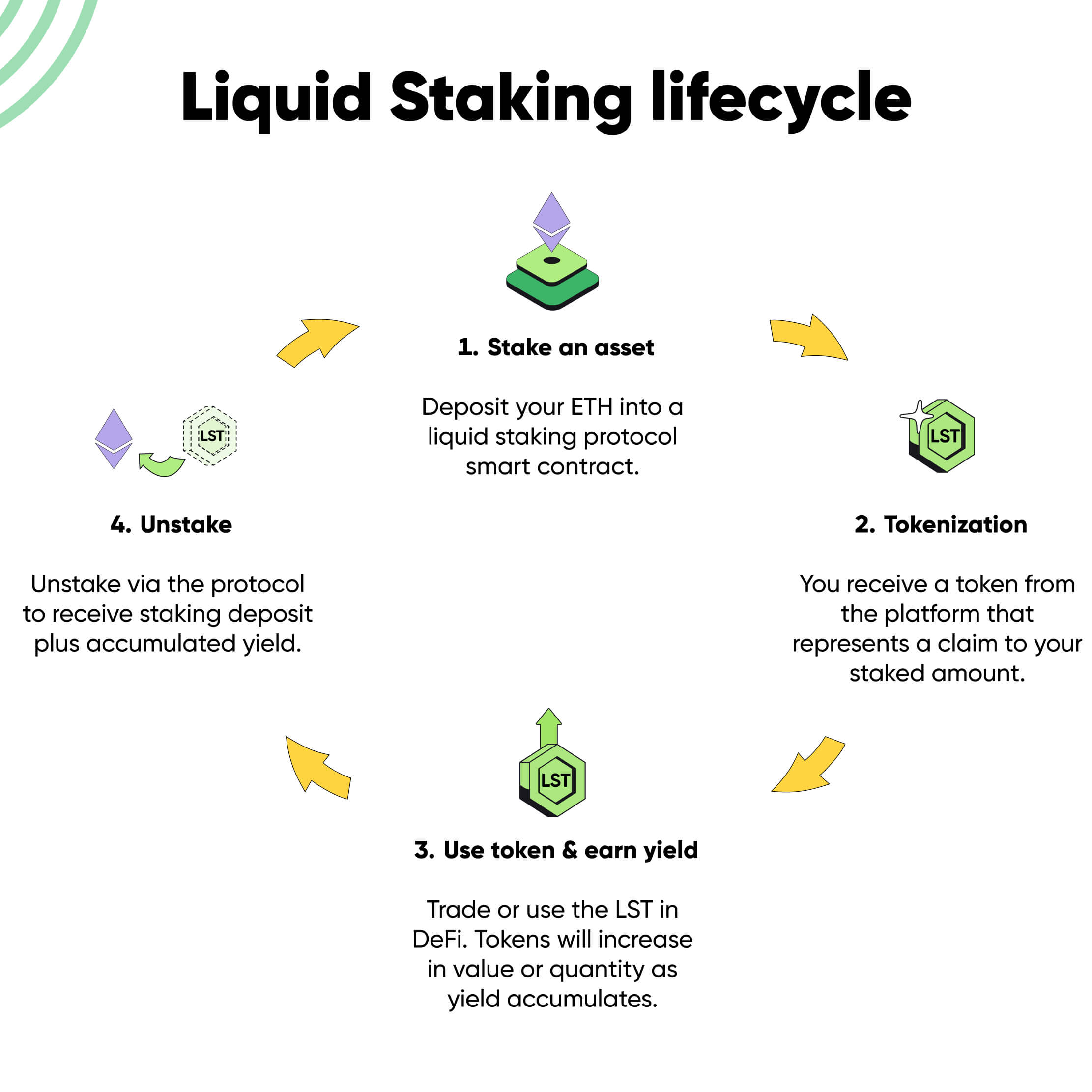
Liquid staking allows you to earn yield on crypto assets without removing them from circulation. When you stake with a traditional provider, your tokens are locked and inactive. Liquid staking solves this by issuing a receipt token that represents your staked position. This receipt token retains its value and remains usable within the broader ecosystem.
This mechanism transforms idle capital into active liquidity. Instead of watching your staked assets sit dormant, you can deploy the receipt token elsewhere. You might use it to provide liquidity in a decentralized exchange or as collateral for a loan, all while continuing to earn the underlying staking rewards.
The most prominent example in 2026 is Lido, which dominates the Ethereum liquid staking market. Rocket Pool offers a decentralized alternative for those seeking a different governance structure. Both systems function on the same principle: you deposit your native coin, and the protocol manages the validator infrastructure while issuing a tradable representation of your stake.
How to start liquid staking
Liquid staking lets you earn staking rewards while keeping your assets liquid. You deposit crypto into a protocol, receive a receipt token, and can use that token in other DeFi activities. This guide walks you through the setup process.
You need a self-custody wallet that supports your chosen blockchain. MetaMask is a standard choice for Ethereum-based liquid staking. Ensure your wallet is secure with a hardware key if possible. You will need some ETH to cover transaction fees (gas) before you can stake.
Select a reputable protocol to manage your stake. Lido and Rocket Pool are leading liquid staking providers for Ethereum. Compare their fee structures and decentralization models. Read the official documentation to understand how rewards are distributed and any slashing risks involved.
Navigate to the official website of your chosen protocol. Click the "Connect Wallet" button and authorize the connection in your wallet interface. Double-check the URL to avoid phishing sites. Only use links from official sources or trusted directories.

Enter the amount of ETH you wish to stake. Review the transaction details, including the gas fees and the expected receipt token amount. Confirm the transaction in your wallet. Wait for the blockchain to process the deposit. This usually takes a few minutes.
Once the transaction is confirmed, you will receive receipt tokens (like stETH or rETH) in your wallet. These tokens represent your staked ETH and accrue rewards over time. You can now use these tokens in supported DeFi applications while earning staking yield.
Best liquid staking tokens for 2026
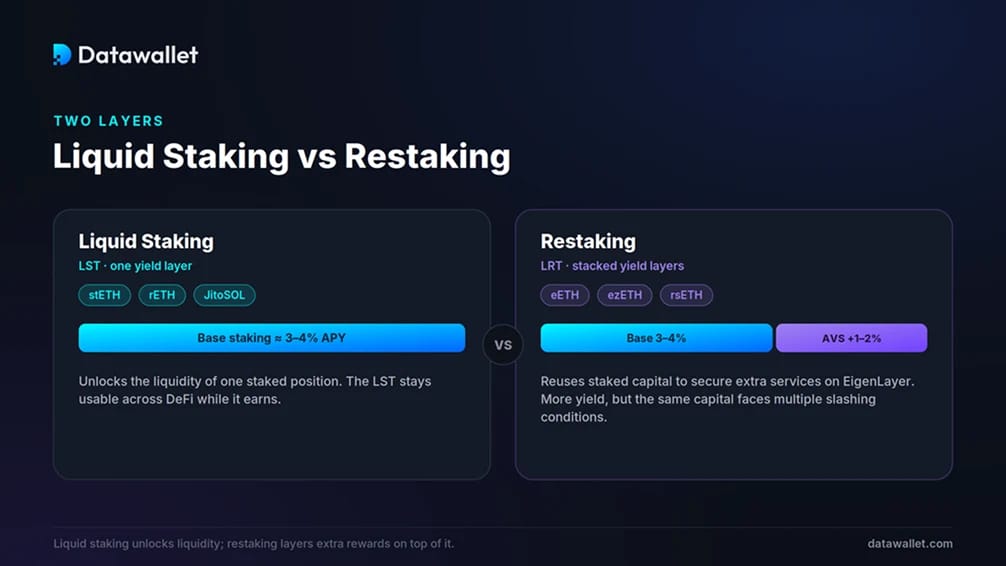
Choosing the right liquid staking token requires balancing yield against decentralization. In 2026, the market has consolidated around three primary options, each serving a different risk profile. Lido dominates by volume, Rocket Pool prioritizes node diversity, and EigenLayer introduces a new yield layer through restaking. The table below compares their current metrics to help you select the appropriate tool for your capital.
| Protocol | Est. APY | Decentralization | Supported Chains |
|---|---|---|---|
| Lido (stETH) | 3.5–4.5% | Low (High Node Concentration) | Ethereum, Solana, Polygon |
| Rocket Pool (rETH) | 3.0–4.0% | High (Permissionless Nodes) | Ethereum |
| EigenLayer (eETH) | 4.5–6.5% | Medium (Restaking Risk) | Ethereum |
Lido remains the largest provider, offering the deepest liquidity for stETH. Its scale makes it the default choice for DeFi integration, but the concentration of node operators introduces centralization risks that some investors avoid. Rocket Pool solves this by allowing anyone to run a node, distributing control more evenly across the network, though its yield is typically slightly lower due to the lack of restaking rewards.
EigenLayer represents the 2026 shift toward restaking. By re-staking ETH to secure other networks, it offers higher yields than traditional liquid staking. However, this comes with a higher risk profile. If you are prioritizing capital preservation, Rocket Pool’s decentralized model is safer. If you are chasing maximum yield and understand the slashing risks, EigenLayer is the leading option.
Risks and common mistakes to avoid
Liquid staking 2026 strategies offer high yields, but they introduce specific technical risks that can erase profits or wipe principal. Understanding these vulnerabilities is as important as selecting the right protocol.
Smart contract vulnerability
Liquid staking protocols rely on complex code to manage staking rewards and token minting. If the smart contract contains a flaw, attackers can exploit it. Always verify contract addresses through official channels. Phishing sites often mimic popular liquid staking protocols to steal funds.
Depegging events
Liquid staking tokens (LSTs) are pegged to the underlying asset (e.g., stETH to ETH). During market stress, LSTs can trade below their peg. This depegging creates immediate unrealized losses. To mitigate this, diversify across multiple protocols and monitor LST discount rates closely.
Slashing and penalties
Staking validators can be "slashed" for downtime or malicious behavior. While many protocols insure against slashing, not all do. Check the protocol's slashing protection policy. If a validator is slashed, your LST value may drop, and recovery can be slow or incomplete.
Mistake: Ignoring withdrawal queues
Some protocols impose withdrawal queues during high demand. If you need liquidity urgently, you might be stuck waiting. Choose protocols with deep liquidity pools or decentralized exchanges for faster exit options. Always check the current withdrawal status before committing large capital.
How to use receipt tokens in DeFi
Liquid staking 2026 allows you to keep earning validator rewards while deploying that same capital elsewhere. Instead of letting assets sit idle, you receive a receipt token representing your staked position. This token functions as a tradable asset, turning static staking yields into active capital.
Lend for Interest
Deposit your receipt token into a lending protocol to earn interest from borrowers. This creates a dual-income stream: the base staking yield plus the lending rate. Ensure the protocol supports your specific receipt token to avoid compatibility issues.
Provide Liquidity
Add your receipt token to a liquidity pool, typically paired with its underlying asset or a stablecoin. This generates trading fees and potential protocol incentives. Be aware of impermanent loss, which can erode gains if the price of the receipt token diverges significantly from the underlying asset.
Restake for Compounding
Some protocols allow you to restake receipt tokens to secure additional networks or services. This amplifies your exposure and potential yield but increases complexity and smart contract risk. Only use restaking if you fully understand the slashing conditions and protocol mechanics.
-
Verify gas fees are manageable for the transaction
-
Confirm the receipt token is supported by the target protocol
-
Assess the risk of impermanent loss in liquidity pools
Liquid staking 2026: frequently asked: what to check next
Helpful gear
Use these product recommendations as a starting point, then choose the size, material, and price point that fit how you actually use the gear.


As an Amazon Associate, we may earn from qualifying purchases.
No comments yet. Be the first to share your thoughts!