
Market growth and yield shifts in 2026
The liquid staking market has moved past its experimental phase, evolving into a foundational pillar of decentralized finance. Industry projections indicate the sector is expanding from an estimated $198 million in 2025 to $572 million by 2032, reflecting a compound annual growth rate of 16.9%. This trajectory signals that liquid staking is no longer a niche strategy but a mainstream infrastructure component for both retail and institutional capital.
While Ethereum remains the dominant asset class for staking, the 2026 landscape is defined by diversification. Protocols are increasingly supporting multi-chain ecosystems, allowing users to stake assets across various networks while retaining liquidity. This shift reduces reliance on a single chain’s performance and opens new avenues for yield generation through cross-chain liquidity pools.
The underlying value of these protocols is closely tied to the performance of the base assets. As the market matures, yields are becoming more stable and transparent, driven by real network activity rather than speculative incentives.
Leading LST protocols for Ethereum and Solana
The liquid staking landscape is dominated by three primary protocols, each optimizing for different priorities in decentralization, yield generation, and network compatibility. Lido remains the market leader for Ethereum, while Jito has emerged as the dominant force on Solana by integrating MEV (Maximal Extractable Value) rewards. Rocket Pool offers a decentralized alternative to Lido for Ethereum stakers who prioritize node operator independence.
Comparing these protocols requires looking beyond simple APY. Yield sources differ significantly: Lido and Rocket Pool derive returns primarily from base staking rewards and priority fees, while Jito adds a layer of MEV rewards on top. Market share also dictates liquidity depth and slippage risks when trading LSTs. The following table breaks down the key metrics for the top protocols in 2026.
| Protocol | Network | TVL (USD) | Est. APY | Decentralization |
|---|---|---|---|---|
| Lido | Ethereum | 24.5B | 3.2% | Medium |
| Jito | Solana | 2.8B | 7.5% | Low |
| Rocket Pool | Ethereum | 1.9B | 3.1% | High |
Lido Finance controls the largest share of liquid staked Ethereum, offering high liquidity but facing centralization concerns due to its reliance on a few large node operators. Rocket Pool addresses this by allowing anyone to run a node with a smaller minimum deposit, resulting in a more distributed network but slightly lower TVL. On Solana, Jito has captured the majority of liquid staking volume by bundling MEV rewards with staking yields, offering significantly higher APYs than native staking, though with less decentralization than Ethereum-based alternatives.
Market valuation for these tokens reflects their utility and risk profiles. LDO and JTO trade at premiums that account for their respective ecosystem growth and yield potential. Monitoring live prices helps assess entry points for yield strategies.
Investors should note that higher APYs, such as those offered by Jito, often come with increased complexity and exposure to MEV market volatility. Ethereum-based protocols like Lido and Rocket Pool provide more stable, albeit lower, returns driven by consensus layer rewards. Choosing between them depends on whether you prioritize yield maximization or decentralization security.
Restaking risks and smart contract exposure
Restaking protocols like EigenLayer have transformed liquid staking tokens (LSTs) from passive yield vehicles into active collateral for new decentralized services. While this mechanism significantly boosts yield by allowing the same ETH to secure multiple networks simultaneously, it fundamentally alters the risk profile for holders. The primary danger is not just market volatility, but the amplification of systemic risk through complex smart contract dependencies.
When you restake an LST, you are no longer just betting on Ethereum’s consensus layer; you are also betting on the security and code integrity of every Actively Validated Service (AVS) you choose to support. If one of these downstream services is exploited or fails, the slashing penalties can be applied to your underlying staked ETH. This creates a chain reaction where a vulnerability in a niche AVS can drain liquidity from major LST protocols, affecting the broader DeFi ecosystem.
The technical complexity of these interactions means that smart contract exposure is no longer isolated. Liquid staking derivatives often serve as the underlying collateral for lending protocols and derivatives platforms. A failure in the restaking layer can therefore cascade through multiple layers of DeFi, potentially causing liquidity crunches or forced liquidations across the market. For 2026, this interconnectedness requires a more rigorous audit of the specific AVSs and smart contracts involved in any restaking strategy.
Investors must weigh the higher APY against the potential for total loss of staked principal due to slashing or exploits. The "risk-free" yield narrative of traditional staking is replaced by a dynamic risk model where code audits and protocol transparency become the primary determinants of safety. As the restaking ecosystem matures, the most significant threats will likely come from unforeseen interactions between these newly minted financial primitives rather than simple market movements.
Strategies for DeFi yield with liquid staking tokens
Liquid staking tokens (LSTs) transform idle staked assets into active capital. By retaining liquidity while earning staking rewards, you can layer additional yield sources on top of base returns. This approach requires careful navigation of lending markets, liquidity pools, and arbitrage opportunities to maximize efficiency without overexposing your portfolio to smart contract or depeg risks.
Lending protocols like Aave and Compound allow you to supply LSTs as collateral or liquidity. This generates yield from borrowing interest while you continue to accrue staking rewards. Always check the loan-to-value (LTV) limits for specific LSTs, as volatile assets often carry lower collateral factors to protect against liquidation during market downturns.

Adding LSTs to automated market makers (AMMs) like Uniswap or Curve can generate significant trading fees. Concentrated liquidity positions allow you to capture more yield within a specific price range. However, be aware of impermanent loss; if the LST price diverges significantly from the paired asset, your position may shift toward the underperforming asset.
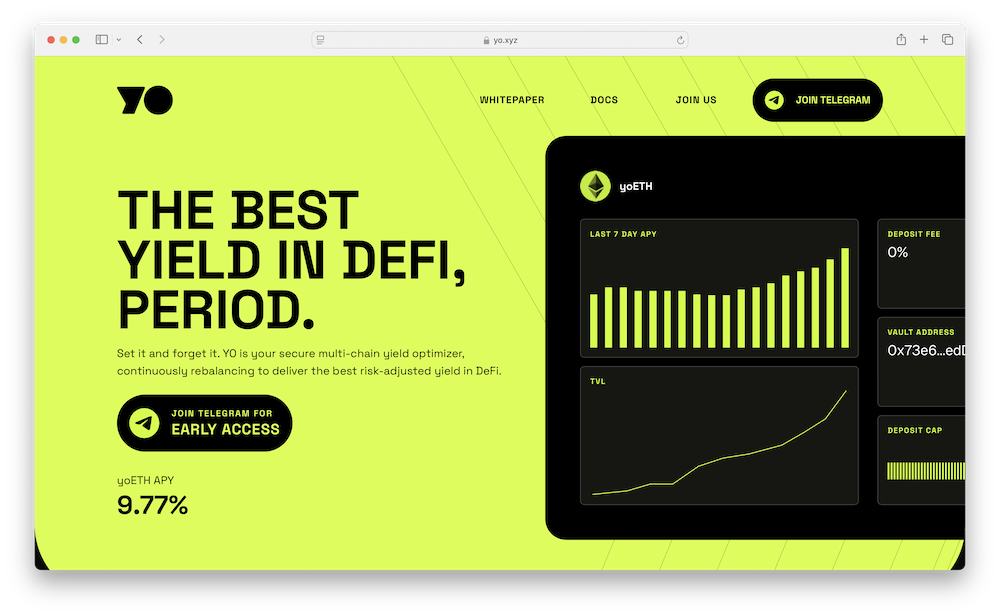
Basis trading involves going long on an LST while shorting the underlying asset (or vice versa) to capture the yield spread. This strategy isolates the staking reward from market price volatility. It requires precise execution and monitoring of funding rates on perpetual futures markets to ensure the spread remains profitable after fees.
Risk management and monitoring
Maximizing returns requires active risk management. Smart contract vulnerabilities in both the LST protocol and the DeFi platform you are using pose a constant threat. Diversify your exposure across multiple protocols rather than concentrating all assets in a single platform. Additionally, monitor the depeg risk of your LSTs; if the token falls below its underlying asset's value, your collateral value in lending markets may drop rapidly, triggering liquidations.
Technical analysis can help time your entries and exits. Use charting tools to identify support and resistance levels for your LST pairs, helping you decide when to add liquidity or rebalance your positions. Regularly review the health metrics of the staking protocol, such as validator performance and network uptime, to ensure your underlying staking rewards remain consistent.
Common questions about liquid staking
What is the future of liquid staking?
The market for liquid staking is expanding rapidly as institutional adoption grows. Industry projections estimate the global market will grow from USD 198 million in 2025 to USD 572 million by 2032, reflecting a compound annual growth rate of 16.9%. This trajectory suggests liquid staking will remain a core component of DeFi liquidity strategies in the coming years.
Which liquid staking token will have the highest 1hr return?
Short-term returns on liquid staking tokens fluctuate based on network activity and validator performance. To identify the best-performing assets in real-time, you can monitor live metrics on CoinGecko’s liquid staking tokens category. These dashboards track hourly performance variations across major protocols, allowing you to spot temporary yield spikes or shifts in validator efficiency.
What is the best liquid staking platform?
The optimal platform depends on your specific needs for security, ease of use, or asset variety. For pure liquid staking features, Lido Finance is widely considered the industry leader. Beginners often prefer Coinbase for its user-friendly interface, while those seeking decentralized Ethereum staking may choose Rocket Pool. For broader asset variety and higher yields, Binance and Kraken are also top contenders in 2026.
No comments yet. Be the first to share your thoughts!