

Picture this: in 2025, the liquid staking sector isn’t just a buzzword - it’s a seismic shift for Proof-of-Stake (PoS) blockchains. Gone are the days when staking meant locking up your assets and sitting on the sidelines. Liquid staking protocols now empower users to earn staking rewards while keeping their capital nimble, creating a flywheel of yield opportunities across DeFi. Let’s break down how this innovation is turbocharging capital efficiency and why it’s at the heart of every serious DeFi strategy today.
Why Capital Efficiency Matters in PoS Blockchains
Traditional PoS networks like Ethereum or Solana require validators to lock their tokens as collateral to secure the network. While this mechanism strengthens blockchain security, it comes with a trade-off: locked tokens can’t be used elsewhere. For investors and institutions chasing yield, idle collateral is wasted potential.
This is where liquid staking 2025 solutions come into play. By issuing liquid staking tokens (LSTs) such as stETH (Lido) or rETH (Rocket Pool), these protocols let users stake their assets yet retain liquidity. LSTs can be freely traded, lent out on money markets, or stacked in complex DeFi strategies for extra returns. In short: you earn native staking rewards and unlock new layers of yield without sacrificing access to your capital.
The 2025 Liquid Staking Landscape: Numbers Don’t Lie
The data tells a compelling story. As of July 1,2025, roughly 35.56 million ETH was staked - representing about 28% of Ethereum’s total supply. This surge reflects not only increased trust in PoS security but also the mainstream embrace of liquid staking tokens DeFi platforms are offering.
Lido Finance and Rocket Pool are leading this charge. Their LSTs are integrated across major lending platforms and DEXes, letting users maximize their yield optimization liquid staking strategies with minimal friction. According to recent market research, over $66.86 billion is now locked in liquid staking protocols globally, with an aggregate market cap for LSTs at $86.4 billion. That’s not just growth - it’s a paradigm shift in how crypto capital moves and multiplies.
The Restaking Revolution and Layered Yields
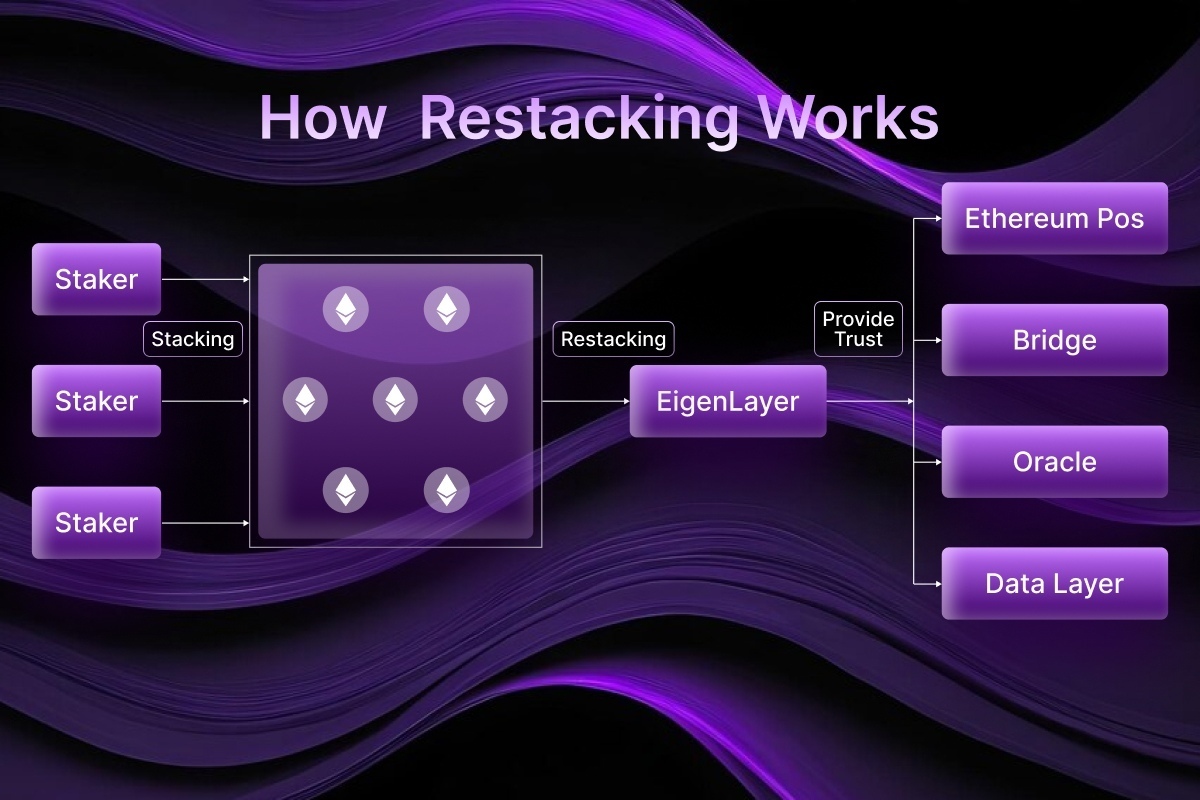
The big story for 2025? It’s not just about single-layer yields anymore - it’s about stacking them up through restaking protocols like EigenLayer. These platforms allow you to take your LSTs and stake them again on additional networks or services, compounding your rewards while maintaining exposure to core assets like ETH.
This layering effect has sparked what many are calling the “restaking boom. ” Now, savvy investors aren’t just passively earning from one protocol - they’re actively deploying LSTs across multiple venues for exponential gains. It’s no surprise that institutional players are piling in after regulatory clarity from agencies like the SEC gave liquid staking its green light earlier this year.
Navigating Risks: Centralization vs Decentralization
No innovation comes without its challenges. As more assets flow into major providers like Lido or Rocket Pool, concerns about centralization risk have intensified. Vitalik Buterin himself has warned that too much dominance by a handful of protocols could threaten Ethereum’s decentralization ethos at Layer 1.
This tension between efficiency and decentralization is shaping ongoing debates among developers and investors alike. Some see diversification across multiple providers as essential; others advocate for new governance models or technical solutions like Distributed Validator Technology (DVT) to spread risk further.
If you want to dive deeper into how these dynamics compare with traditional approaches, check out our comprehensive guide on maximizing yield and capital efficiency in DeFi with both liquid and traditional staking options:
As the sector matures, we’re seeing a new wave of protocols experimenting with innovative governance, risk mitigation, and incentive structures. Distributed Validator Technology (DVT) is gaining traction as a way to decentralize validator operations and reduce single-point-of-failure risks. Meanwhile, smaller, community-oriented staking pools are popping up to counterbalance the dominance of market leaders. The result? More choice for users and a healthier, more resilient ecosystem.
Regulatory clarity has also been a huge tailwind for liquid staking in 2025. The SEC’s green light earlier this year unlocked institutional capital that was previously sidelined by compliance concerns. Now, funds can stake assets, receive liquid receipt tokens instantly, and deploy those tokens across DeFi, without long lockups or operational headaches. This shift is accelerating the migration from traditional staking to more flexible, yield-optimized strategies.
Yield Optimization: Strategies for 2025
For investors looking to maximize returns in this new era of yield optimization liquid staking, the playbook is rapidly evolving. Here are some of the top strategies gaining momentum:
- LST Collateralization: Use LSTs like stETH or rETH as collateral on lending platforms to borrow stablecoins or other assets while still earning staking rewards.
- Restaking and Layered Yield: Deploy LSTs into restaking protocols such as EigenLayer to earn additional rewards on top of base staking yields.
- LST Liquidity Pools: Provide liquidity on DEXes using LST pairs to capture trading fees and potential liquidity mining incentives.
- Automated Yield Aggregators: Leverage smart contract vaults that auto-compound and rotate between protocols for optimal returns.
The beauty? These strategies let you stack yields without giving up exposure to core assets like ETH or SOL, making them central pillars in any advanced proof of stake DeFi strategies.
The Road Ahead: Efficiency Without Compromise?
The numbers don’t lie: with over $66.86 billion locked in liquid staking protocols and $86.4 billion in aggregate LST market cap as of November 2025, capital efficiency PoS is no longer an experiment, it’s a blueprint for the future of decentralized finance.
The next chapter will be defined by how well projects can balance efficiency with decentralization and security. Expect further innovation around multi-chain interoperability, real-time risk monitoring tools, and user-driven governance models that keep both capital nimble and networks robust.
If you’re ready to make your capital work harder, and smarter, in PoS ecosystems, now’s the time to explore what liquid staking offers. With new products launching monthly and institutional adoption surging post-SEC approval, there’s never been a better moment to optimize your yield stacking game while staying true to DeFi’s decentralized roots.




No comments yet. Be the first to share your thoughts!